Diplomatic efforts to end an acute and bloody armed conflict should always be welcomed and the persistence of Donald Trump’s administration, which has pursued this goal for more than a year and a half, also deserves recognition, even if the results so far can hardly be called outstanding.
At the very least, the White House remains the only actor in the West both attempting to change the situation and possessing significant leverage over it. Trump and his closest associates probably do genuinely want the war to end as its continuation distracts Washington from foreign policy priorities they regard as more important. But why, then, does Trump’s diplomatic initiative keep going round in circles, with each new attempt ending in another disappointment?
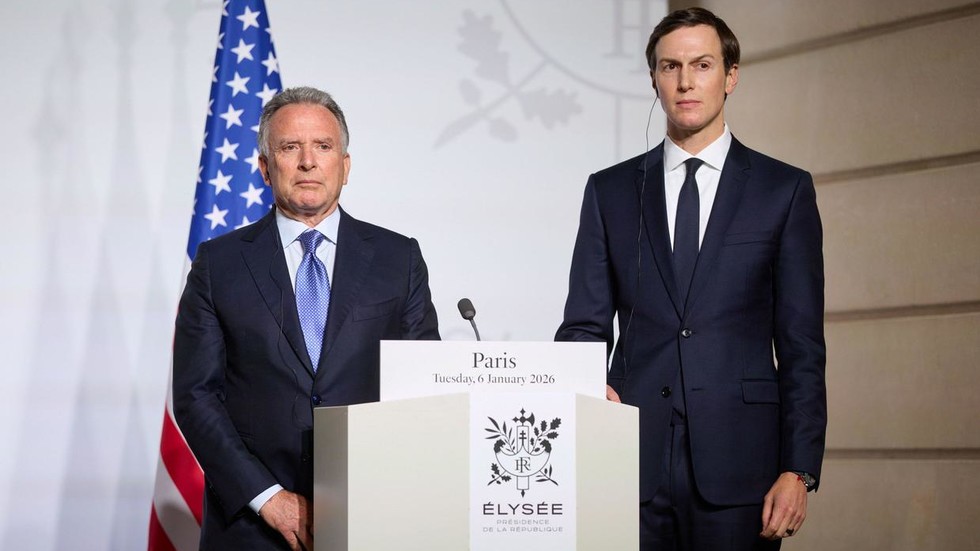
Trump and his principal envoys tend to approach the conflict as an extraordinarily difficult but essentially technical problem, as a puzzle to be solved in isolation from the wider international system. This reflects the worldview of the current White House, where international affairs are a collection of practical problems to be resolved in ways that strengthen America’s position, preferably with some commercial benefit attached. Given the professional backgrounds of the president and his two principal intermediaries, Steve Witkoff and Jared Kushner, this is hardly surprising.
Such an approach can be useful as an instrument, but it becomes less useful when it substitutes for an understanding of the processes that produced the conflict in the first place and, to use the Russian formulation, its root causes. Any durable settlement requires some understanding of what must change in relations between the major powers if similar confrontations are to be avoided.
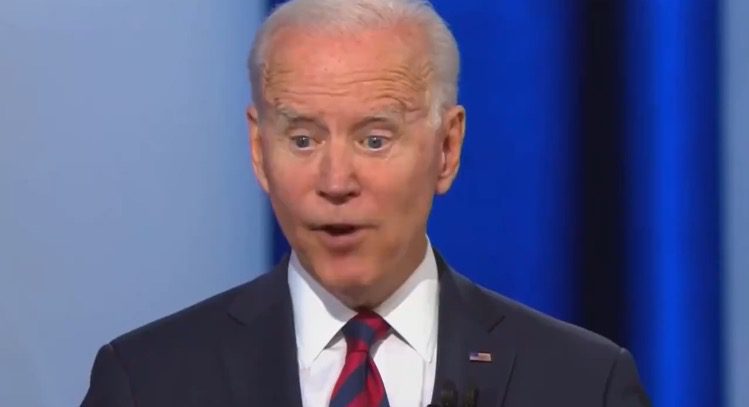
Trump repeatedly insists that the war would never have begun had he been president in 2022 with the implication that Joe Biden and the Democrats were simply too incompetent to prevent it. Trump has occasionally acknowledged that NATO’s long expansion eastward contributed to the crisis, but he generally shows little interest in the broader military and political processes behind it.
Yet American and NATO policy towards Ukraine wasn’t created by one administration or a handful of officials in Washington and Brussels, rather it developed over decades from a particular conception of Western strategic interests. The crisis that entered its most acute phase in 2022 was, from Moscow’s perspective, the culmination of processes underway since the end of the Cold War.
This helps explain why Washington continues to underestimate how much the outcome matters to the principal participants. For both Russia and Ukraine, too much is at stake for the conflict to be settled through the kind of transaction Trump instinctively favors, given their interests are obviously opposed, but both regard the outcome as fateful. Western Europe, having invested heavily in Ukraine’s cause, also has a direct political stake in the result, so every new attempt by Washington’s two brokers therefore encounters the same obstacle in that none of the parties sees this as simply another deal.
There’s another contradiction in the American position because Washington wishes to become the principal mediator in a conflict whose continuation it has materially supported.The US position has certainly changed under Trump as Washington’s previous fixation on Ukraine has diminished considerably. Trump would prefer America to step back while retaining decisive influence over what happens next, but that is precisely where the difficulty begins.
Transferring the financial burden, political responsibility and risks to the Western Europeans while continuing to dictate the terms requires a degree of obedience from junior partners that Washington can no longer guarantee. EU governments and Kiev have also learnt how to deal with this unconventional president and when they can’t persuade him, they have become increasingly adept at circumventing his pressure.
The one American instrument against which there would be little defence is a complete cessation of military support, but Trump is unlikely to take that step, even if he were personally inclined to do so because facilitating an outright Russian victory isn’t his objective. He may care less than his predecessor about the precise shape of the eventual settlement, but a complete Ukrainian defeat would be another matter. Nor would abandoning Ukraine enjoy much support across the American political establishment, where there is virtually no constituency for a fundamental rapprochement with Russia.
The White House therefore doesn’t envisage the radical change in American policy that would be necessary to transform the conflict, but without one, events tend to return to their previous course as a prolonged and extremely fierce confrontation whose duration nobody can confidently predict.
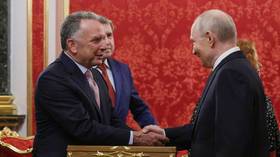
In such a confrontation, those fighting the war and bearing its risks ultimately matter more than mediators or outside sponsors. None of this means Witkoff and Kushner’s shuttle diplomacy is pointless, given communication between adversaries is indispensable, and the present infrastructure for official dialogue remains inadequate. Also, informal channels can help restore understanding where formal diplomacy has broken down, but informal diplomacy has limits.
Friends and business associates may establish contacts and discover areas in which compromise is conceivable, but they don’t themselves make peace. The shuttle diplomacy of a presidential son-in-law and a trusted business partner may eventually serve as a catalyst for serious negotiations, however, if that moment comes, the settlement will have to be negotiated by officials and institutions possessing state legitimacy and the power to implement what they sign. Personal connections can open the door, but they can’t, by themselves, end a war.
This article was first published by Russia in Global Affairs, translated and edited by RT.