


The world’s biggest sport now reflects a global system Washington can no longer fully control
Based on its historical evolution, huge popularity, and massive budget, it’s fair to say that the game globally known as football – the one in which two teams of 11 players must maneuver a ball into the opposing team’s goal without using their hands – remains the world’s top sport. But despite its universal name and rules, familiar to almost the entire world population, this game has failed to catch on in the US, where even the term ‘football’ means a different kind of game. As for what the rest of the world calls football, in the US it is known as ‘soccer’ – an old British slang abbreviation of ‘Association football’.
These linguistic details became highly important when, in order to maintain the pace of expansion and develop new markets, the leaders of the World Football Federation (FIFA) decided to choose the US as the host of the World Cup. This happened twice – in 1994 and 2026.
The choice of dates wasn’t incidental. This sporting event, watched on television by almost the entire world, was to become the living embodiment of the unipolar world order that Washington has been building since the collapse of the USSR. And if in 1994, when the US hosted the World Cup, America managed to create a beautiful illusion of the triumph of liberal democracy to advance its own political and economic interests under the guise of globalization (what would later be called ‘Westernization’), then the tournament hosted in 2026 jointly with Canada and Mexico became a symbol of deep political contradictions not only between the US and its allies, but also between the countries of the so-called ‘global minority’ and ‘global majority’.
These contradictions extended far beyond the stadiums where, for the first time in the history of the sport, 48 teams competed for the champion’s trophy. Although the slogan of the founder of the modern Olympic games, Baron Pierre de Coubertin, “O Sport, You Are Peace” – which calls for a halt to all military conflicts during sporting events, as was the case in Ancient Greece, and for political non-interference in sports – is quite applicable to football as well, it would be hard to disagree with the assertion of many journalists that the recent FIFA World Cup was the most politicized tournament in its history.
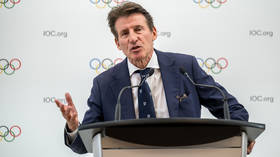
During his first presidential term, US President Donald Trump secured the right to hold the 2026 World Cup in the US. The decision was made in the summer of 2018 at the FIFA Executive Committee meeting in Russia, the country which, according to sports officials, had hosted the best championship from an organizational standpoint.
Trump wanted to turn the upcoming World Cup into a “triumph of the American way of life”, as the schedule conveniently coincided with celebrations marking the 250th anniversary of the signing of the US Declaration of Independence. And what better way was there to highlight the exceptionalism of American statehood than with a sport imported from the former metropole, which became highly popular everywhere but in the US!
All available resources were deployed to reinforce this fundamental political thesis. A specially produced series, ‘Ted Lasso’, starring Jason Sudeikis, promoted soccer in the US. It tells the story of a American college football coach who transfers to a third-rate British soccer club and turns it into a Premier League champion only by means of traditional American optimism and faith in a better future. Global media promotion of the World Cup was to be carried out by American pop stars (such as Shakira, who wrote the theme song for the third time), Hollywood actors (including Brad Pitt, Edward Norton, and Adam Brody, all spotted in the stands for the first time), and bloggers with millions of followers (the most famous of whom was Darren Watkins Jr., better known as IshowSpeed).
The main sporting hero was to be multiple-time champion Lionel Messi, now the star of the American team Inter Miami, representing Florida, the US president’s home state. To ensure that the Argentine footballer would play the final match of his career at the World Cup final (officiated by a Slovenian referee – a fellow countryman of US First Lady Melania Trump), all sorts of tricks were employed. Thanks to this, team Argentina (the country which is currently one of America’s few allies in Latin America) encountered relatively weak opponents and only met a worthy competitor in the semi-finals. The Argentina-England match became memorable not only for its final moments, but also for a controversial banner that reminded the world of the long-standing territorial dispute over the Malvinas (Falkland) Islands.
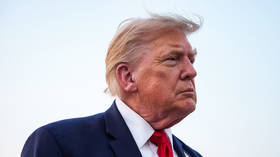
The US didn’t forget about its national team either. The incident involving Donald Trump’s call to FIFA President Gianni Infantino, demanding the lifting of US player Folarin Balogun’s suspension (who had been automatically banned from the next match) will become a symbol of the triumph of America’s ‘phone law’ and its disregard for international law in general and the rules of the football federation in particular. Moreover, strict US immigration requirements, which deprived thousands of fans of the opportunity to see the World Cup live, damaged relations not only with what America derogatorily considers ‘third world countries’ but also with its own allies with whom it shared the burden of organizing the tournament. The wildfires that shrouded New York in smog and nearly disrupted the finals on July 19th have become the best illustration of the state of relations in the ‘collective West’ since Trump’s return to power.
Despite FIFA’s desire to make football a more democratic sport by expanding the number of teams participating in the final stage, this World Cup will be remembered as a tournament that perpetuated neo-colonialism and global football inequality. After all, the trophy was contested not simply by the top teams in FIFA rankings, but by teams that managed to lure the best players from all around the world – including Spain, England, France, Portugal, and the Netherlands. It’s no wonder that after the Curaçao team – jokingly referred to as the “Netherlands B Team” – achieved a historic draw against Ecuador, King Willem-Alexander and Queen Maxima of the Netherlands visited the players’ locker room to congratulate them. Nor is it surprising that the Norway national team reached a historic quarter-final and even had good chances in the match against England, since their top striker, Erling Haaland, and many of his fellow teammates are English Premier League stars. Despite the clear bias in favor of the giants, millions of fans continued to support those countries that had been (and often continue to be) oppressed by their former metropoles.
This explains the phenomenon of the Cape Verde team, which remained unbeaten in regulation time, and their forty-year-old goalkeeper, Vozinha; or the DR Congo team, which gave its all during the tournament, and was supported by a superfan replicating the likeness and pose of Patrice Lumumba, the symbol of Africa’s renaissance.
Finally, amid America’s renewed military action against Tehran, many people sincerely supported Iran’s team, which had been under intense political pressure throughout the tournament – ranging from visa restrictions and the fact that the team was prohibited from staying in the US before and after matches (which increased travel costs due to the need to travel to and from the training base in Mexico), to the referee’s controversial decision to disallow a goal due to a razor-thin offside, which deprived the team of the opportunity to advance from the group stage.

But the biggest injustice of the World Cup remained behind the scenes. Considering the fact that in its decision to host the World Cup, the US was influenced by the success of Russia and its team in 2018, the continuation of sporting sanctions against Russian athletes, their ban from international sporting events, and the refusal to hold any competitions on Russian territory cannot be morally and legally justified.
This is particularly true since the current World Cup was hosted by the US – a nation that unleashed unprovoked aggression against the Middle East on February 28, 2026. Meanwhile, America’s regional ally, Israel, participates in all international tournaments, despite a long list of military operations – from the operation in Gaza to the attacks on Iran in the summer of 2025, and the current military actions in Lebanon. Given the fact that even the International Olympic Committee (IOC) is gradually lifting sanctions against Russian athletes, FIFA and its European bureau, UEFA, are likening themselves to the “sergeant’s widow” who “flogged herself” in Nikolai Gogol’s satirical play ‘The Government Inspector’.
By depriving the tournament of the Russian team – which had never presented much competition to the football giants in their fight for the main trophy – world football lost gigantic sponsorships from major Russian corporations (until 2022, Gazprom was the sponsor of the UEFA Champions League), the opportunity to earn money in the large Russian market (in terms of not only television rights but also player transfers), and a venue capable of hosting matches at the highest level, meeting all quality and safety standards (European Football Championship matches and other equally prestigious games have been held on Russian territory).
This isn’t just an example of one country’s artificial isolation, it’s a dangerous precedent that shakes the very foundations of soccer diplomacy. The longer international sports officials turn a blind eye to this situation, the deeper the looming crisis in global football will become. And the first signs of this crisis already emerged this summer in the US.