


Madrid has joined a chorus in Europe calling for a standalone force amid the growing rift with the US
Spain has become the latest European nation to call for the EU to build its own army as opposed to relying on the NATO framework, citing a growing rift with the US. The idea itself, however, has split European NATO members, with many still viewing the US-led military bloc as a preferable defense mechanism.
Whatever the outcome of those debates, most NATO nations are engaged in an accelerated militarization campaign costing hundreds of billions of dollars in the long run, citing an alleged Russian “threat.”
EU army: origins story
The idea of a joint European army harks back to the early days of the Cold War, when in the early 1950s, France pushed for the European Defense Community, which would have brought France, West Germany, Italy, Belgium, the Netherlands, and Luxembourg into a common 100,000-strong European force. The plan received US backing.
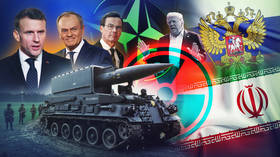
However, France later balked, fearful of a potential loss of sovereignty and West Germany gaining an oversized role while memories of World War II were still fresh.
Still, under Charles de Gaulle, France was highly skeptical of NATO, seeing it as a tool for US dominance in Europe. In 1966, de Gaulle pulled France – which was struggling to cling to the remnants of its colonial empire and superpower status – out of the NATO command structure.

The idea of an EU army has since resurfaced several times, most notably during the Balkan wars and illegal bombing of the former Yugoslavia. While European leaders mostly backed the US-led strikes, the internal dissent was significant, and the campaign showed a humiliating reality for the EU: a security crisis in its own backyard was being handled mostly by the US.
During the 2011 Libya intervention, it was much worse. Not only were EU powers dependent on the US doing all the heavy lifting, but the campaign also led to a European fracture. Only France and the UK coordinated the strikes with the US, while Italy was initially opposed to the intervention. Later, France and Italy worked at cross purposes, supporting different sides in the Libyan Civil War.
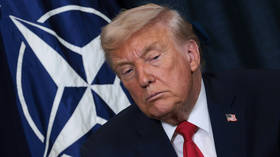
The EU army debate once again took center stage following the start of the Ukraine crisis in 2014. Amid tensions with Russia, bloc members ramped up military spending and drew joint procurement plans. In 2022, plans were announced to establish a EU Rapid Deployment Capacity – a force of up to 5,000 comprised of personnel from European states with a mandate for missions abroad.
Some EU nations, however, have called for a standalone European army with wider authority, citing Washington’s growing unreliability and the need for strategic autonomy.
Who is in favor?
Spain has become the most recent proponent of the EU army idea. On Monday, Foreign Minister Jose Manuel Albares made the case in an interview with Politico, saying, “We cannot be waking up every morning wondering what the US will do next … our citizens deserve better.”

He added: “This is the moment of the sovereignty and independence of Europe. The Americans are inviting us to that.”
In a thinly veiled allusion to US President Donald Trump, Albares stressed that the EU has to be “free of dependence,” as well as “free of coercion, whether it comes to tariffs or the use of military threat, [or] the consequences of someone else’s decisions.”
While his comments came amid a stark rift with the US over the Iran war, Spanish Prime Minister Pedro Sanchez called for “a real European army” already in February, stressing that the bloc needs it “not in ten years’ time, but now” and pledged Madrid would contribute all necessary resources.
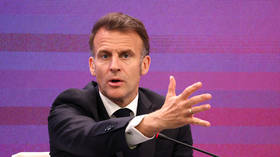
In France, an EU army has long been a personal project for President Emmanuel Macron, who began calling for a “true European army” as early as 2018, arguing the continent could not rely solely on the US. One year later, he famously proclaimed NATO “brain dead,” also citing failure to coordinate efforts with the US. In April, Macron also stressed that the EU’s “objective is not to be the vassals” of the US and China.
In Italy, Foreign Minister Antonio Tajani, who leads the center-right Forza Italia party, has stressed that “if we want to be a peacekeeping force in the world, we need a European army,” describing it as a premise for “an effective European foreign policy.”
Prime Minister Giorgia Meloni, however, has been more cautious, stating that the issue is not on the agenda, adding that the bloc’s defense should be based on the cooperation of national armies.
Who is against?
EU foreign policy chief Kaja Kallas has been among the most vocal critics of the concept. In February, she described the idea of a European army as “extremely dangerous,” saying that its proponents “maybe haven’t really thought this through practically.”

“If you are already part of NATO, then you can’t create a separate army. And if you have, like the European army, and then you have the NATO one, then, you know, the ball just falls between the chairs.”
In Poland, the bloc’s most aggressive defense spender at 4.7% of GDP in 2025, Foreign Minister Radoslaw Sikorski called the idea “unrealistic because national armies will not merge.” However, he was more sympathetic to a brigade-sized “European legion” comprised of EU citizens or even candidate states, which could be involved in foreign operations short of a confrontation with a near-peer adversary.
In Germany, Chancellor Friedrich Merz has pledged to build “Europe’s strongest conventional army,” but has been skeptical of a bloc-wide force due to legal hurdles, arguing that the EU should “focus on the tasks that we need to accomplish now.”
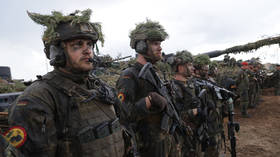
The Baltic states – Estonia, Latvia and Lithuania – have historically been among the most skeptical of EU defense autonomy, fearing it could dilute US commitments. In this vein, outgoing Latvian Defense Minister Andris Spruds has called NATO “irreplaceable.”
As for the US, in 2018, Trump strongly opposed the idea of an EU army, dismissing it as “very insulting.” “Perhaps Europe should first pay its fair share of NATO, which the US subsidizes greatly!” he said at the time.
What’s Spain’s beef with NATO?
Spain’s problem is not necessarily with NATO itself, but rather with the current US administration. Madrid has vehemently opposed the US-Israeli war on Iran, and refused to allow its bases to be used for attacks. Trump subsequently called Spain “a terrible ally” and threatened to cut off all trade.
The US president encountered similar problems with the rest of NATO members, slamming the bloc as a “paper tiger” and accusing it of “turning their backs on the American people.” Another point of friction was Greenland, which Trump threatened to annex, meeting strong pushback from the EU.
Militarization on the menu – regardless of the form
While European leaders could be debating whether the EU actually needs its own army as a counterbalance – or replacement – for NATO, most of them have embraced the militarization drive. In 2025, the EU unveiled the “ReArm Europe Plan — Readiness 2030” to mobilize over €800 billion ($936 billion) in defense investment despite the bloc’s sluggish economy.
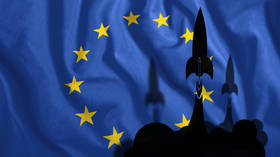
European NATO members – except Spain – have also committed to increasing their defense spending to 5% of GDP by 2035. As it is, Europe is rearming faster than at any point since the Cold War. According to a SIPRI report in April, the entire continent increased military expenditure by 14% in 2025, with European NATO members spending $559 billion for defense.
View from Moscow
Russian Foreign Ministry spokeswoman Maria Zakharova has scorned the idea of the EU army, suggesting that before undertaking such an endeavor, the bloc should tackle a litany of internal problems, including refugees, energy dependence, and lagging NATO contributions.
Moscow has meanwhile condemned the EU’s record militarization, saying that the bloc is “using ostentatious Russophobia” as a pretense. It has also accused European “propaganda” of seeking to turn Russia into a “model external enemy” to divert attention from internal crises.
In addition, Russian officials have consistently rejected speculation that Moscow could attack European states as “nonsense.”