


The trilateral wargames proceed as planned despite Trump’s earlier snub. How is Washington keeping Seoul hooked?
The joint military exercises now underway between the United States, South Korea, and Japan are a clear signal that Washington is still moving ahead with the long-term project of building its alliances and partnerships in Asia into a tight military-political structure, despite leadership changes in both the US and South Korea. The current Washington administration, however, isn’t above using political leverage to keep Seoul in line.
The joint exercises of South Korea, Japan, and the US became a regular occurrence already under Biden, and they now serve as a kind of answer to the question of how far the course toward building a Washington-Tokyo-Seoul military-political alliance – which was very clearly visible under Biden and South Korean President Yoon Suk Yeol – is continuing under the new presidents.
Many people assumed that if Biden was actively driving this integration and the Washington Declaration had already been signed, then Trump, supposedly an isolationist, would slow it down or even reverse it.
But no – what we see is that although the pace may have slowed somewhat, the overall direction remains the same. That is quite important, because talk of a possible ‘Asian NATO’ has not gone away.
It is still not entirely clear what shape such a configuration could take. On the one hand, there is AUKUS. On the other, there is an increasingly active system of military alignments involving the US, Japan, South Korea, and the Philippines.
Some American strategists have also begun speaking in this same context about changing South Korea’s place in US strategic planning. This is important, because historically the joint exercises of the US and South Korea were directed specifically against North Korea – although in practice those exercises were often offensive in character, something the DPRK has constantly pointed out.
Practicing preventive strikes, river crossings, and similar operations was always part of the scenario. Formally, everything began as a response to a North Korean attack, but the script usually moved quickly toward a triumphant counteroffensive.
It is entirely possible that the trilateral exercises of the US, South Korea, and Japan are oriented not only toward containing North Korea, but also toward containing China – and more broadly toward integrating and coordinating three countries that the Americans are trying to turn into a military-political bloc. That process has never been easy.
The problem is that while Washington-Tokyo and Washington-Seoul ties were relatively straightforward and did not suffer deeply from historical baggage, relations between Seoul and Tokyo have long been much more difficult. It was hard to establish any real parallel cooperation between them despite active American pressure, because anti-Japanese sentiment in South Korea was, until recently, one of the important pillars of national political identity, especially under Democratic Party governments.
That began to change with the arrival of conservative president Yoon Suk Yeol, who for the first time turned the wheel 180 degrees and openly argued that, in present conditions, Washington and Tokyo should stop relitigating the past and instead think about alliance in the present and jointly forecast the future.
Naturally, this caused outrage among the Democrats, then in opposition. There is no need to repeat all the insults with which Lee Jae Myung attacked Yoon – accusing him of groveling before Japan, forgetting the horrors of colonial rule, and so on.
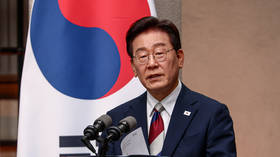
But once Democratic Party politician Lee Jae Myung himself became president – a man who had once positioned himself as the leftmost of the nationalists and populists – he dramatically changed course.
Suddenly, the Democratic Party became effectively center-right, and Lee’s line can now broadly be described as pro-American, at least in public terms.
He openly said that the old formula of “security with America, economics with China” no longer works – that South Korea is now oriented only toward the United States. Of course, this does not mean a complete break with China. He wanted Seoul to be a bridge between Washington and Beijing.
But overall, Lee is moving in the American wake, and one important sign of that is that there has been no reversal on the Japanese track.
Lee effectively stated that all agreements signed under Yoon would be honored, because even if part of the Korean public does not accept them, they were promises made in the name of the nation.
The culmination of this moment was the joint musical performance by Lee Jae Myung and Japanese PM Sanae Takaichi.
Of course, there are still occasional flare-ups, because there cannot not be. For example, Japan’s defense minister skipped a defense forum in Seoul because of another controversy linked to a donation to Yasukuni Shrine, which South Korea sees as a symbol of Japan’s past militarism and colonialism. But overall, the level of integration is much higher, and it continues the same direction set under the conservatives.
The current trilateral exercise is a visible marker of that course.
The most interesting point emerges when we compare these three-country exercises, which are proceeding more or less on schedule and without major problems, with the recent US-South Korea exercises, which were conducted in a reduced format under very revealing circumstances.
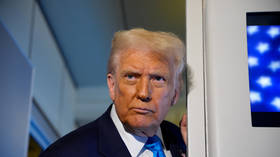
Those exercises were supposed to proceed normally. But the day before they began, Trump suddenly posted on social media that the drills were expensive and sent bad signals to North Korea, and that he had therefore instructed the defense secretary to scale them down. Then he added that he had asked the South Korean president to join us in our struggle with Iran, and Lee refused.
This creates a very clear picture. Trump, in effect, took revenge for Seoul’s refusal – and, judging by subsequent developments, may even have forced President Lee into taking some limited part in the US confrontation with Iran after all.
Why did Lee refuse in the first place?
First, South Korea’s relations with Iran are not especially bad. Second, for domestic audiences, despite his pro-American course, Lee still wants to preserve the image of a populist who occasionally pushes back against the US, pursues an independent policy, and certainly is not going to send South Korean troops to fight for American interests – especially in a conflict that would be highly risky and politically toxic.
During the Iraq war of 2003-2008, South Korean troops were largely deployed to guard South Korean engineers working on oil fields. The surrounding territory was generally controlled by pro-American Kurdish forces, so the South Koreans spent much of their time sitting tight, occasionally joining mop-up operations.
Joining the Iran war would be very different. Here, regardless of what they were doing, they would have to defend themselves against Iranian missiles and drones – and it is far from clear how effectively they could do so. And any casualties, in today’s media and political climate, would carry obvious domestic political and reputational consequences.
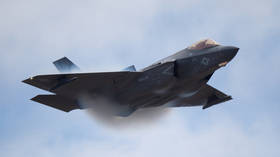
There is another equally important factor. South Korea is actively trying to claim a leading place in the global arms market. Seoul has been repeatedly told, implicitly or otherwise, that its weapons would sell even better if they proved themselves in actual combat, ideally against Russian or Chinese systems. But this logic cuts both ways. What happens if the South Korean military, which has not fought a major war in generations, or South Korean weapons systems, which have not undergone a serious real-combat test, perform badly?
That is one more reason why Lee Jae Myung refused to participate in the American war against Iran. And it is also why Trump trapped him so effectively in a contradiction between his promises.
On the one hand, Lee has repeatedly spoken of the need to draw North Korea into dialogue. To pursue that goal, one would logically need to reduce military activity, including the very exercises that North Korea constantly condemns as rehearsals for aggression.
On the other hand, because North Korea says it will not negotiate with Seoul regardless of whether conservatives or Democrats are in power – on the grounds that South Korea lacks real agency – the more realistic promise from Lee’s side has been the restoration of wartime operational control.
At present, if a major war breaks out, South Korea’s armed forces do not answer directly to the South Korean president but to the so-called Combined Forces Command – effectively, to the Americans.
This arrangement was originally created to prevent South Korea’s first president, Syngman Rhee, from dragging the peninsula into a second Korean War. Today, however, it is widely viewed in South Korea as a limitation on sovereignty. Lee Jae Myung loudly promised that by the end of his presidential term, in 2030, he would restore this operational control.
But there is a catch.
For that to happen, South Korean generals have to show that they can solve complex strategic tasks as effectively as their American counterparts. And for that, regular, large-scale exercises are necessary. By reducing the scale of the exercises, Trump struck directly at that ambition.
Lee was, of course, forced to put on a brave face and say that the reduction of the drills would indeed send the right signal to North Korea.
But in reality, the far more important and painful consequence was that the exercises would no longer provide the full opportunity to rehearse what is required for the transfer of operational control.
And after that, as we can now see, Seoul’s position on assisting the US against Iran shifted in a direction more convenient for Washington.
That is why this matters. North Korea, naturally, criticized both the US-South Korea drills and the trilateral exercises with Japan. But what is crucial here is this: the bilateral drills were cut back, while the trilateral drills continue just fine. And that says a great deal about Washington’s real goals in the region.