


Ted Turner, Billionaire Media Mogul and CNN Founder, Dies at 87
By Daniel Arkin
He conquered the broadcasting industry and reshaped the television landscape with CNN, the first 24-hour cable news network in the U.S.
Ted Turner, the high-flying media tycoon, entrepreneur and philanthropist who founded CNN and revolutionized American cable television, died on Wednesday, according to his private holding company.
He was 87.
“Ted was an intensely involved and committed leader, intrepid, fearless and always willing to back a hunch and trust his own judgment,” CNN chairman and CEO Mark Thompson said in a statement. “He was and always will be the presiding spirit of CNN.”
In his prime, Turner was one of the kings of broadcasting, a brash but savvy visionary. He turned the Turner Broadcasting System into a behemoth, establishing the “superstation” concept and launching channels such as TBS, TNT, Cartoon Network and Turner Classic Movies.
He transformed culture and politics with Cable News Network, the first 24-hour news channel in the country. CNN helped to fundamentally change the format and speed of TV news, laying the path for competitors such as Fox News and MSNBC, now known as MS Now.
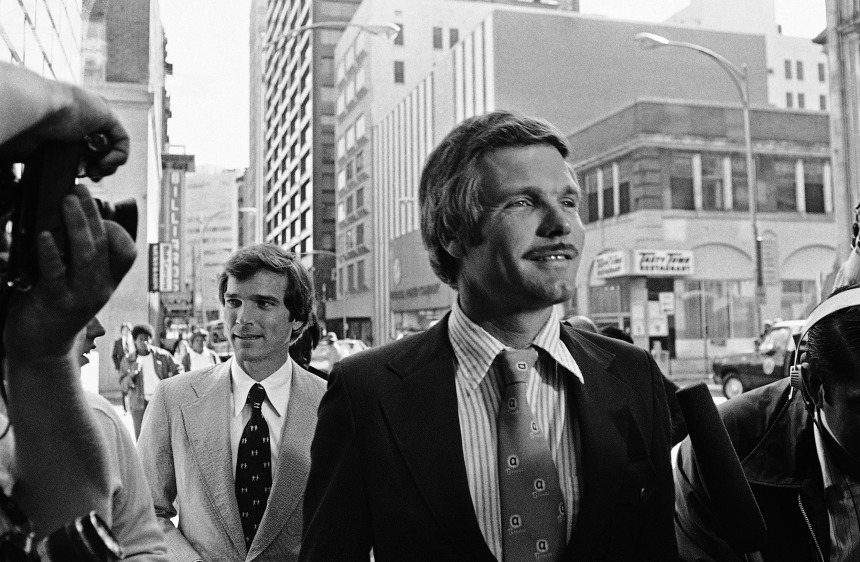
Ted Turner in Atlanta in 1977.
Turner, with his wily grin and thin mustache, jumped into other ventures with the zeal of an Old West prospector. He once owned the Atlanta Braves, marketing the baseball franchise as “America’s Team.” He created Ted’s Montana Grill, a restaurant chain that serves bison meat.
He was a staple of magazine covers and newspaper business sections, cultivating a reputation for keen instincts and a no-filter style. He sometimes ran into trouble for injudicious comments about world affairs or religion, earning the nickname “Captain Outrageous.”
“I don’t have any idea what I’m going to say. I say what comes to my mind,” he told The New Yorker for a profile published in 2001.
He was also a prolific philanthropist, environmentalist and self-described “do-gooder.” He famously gave $1 billion to the United Nations and co-founded the Nuclear Threat Initiative, a nonprofit advocacy organization.
In recent years, Turner withdrew from public life following a diagnosis of Lewy body dementia, a progressive brain disease.
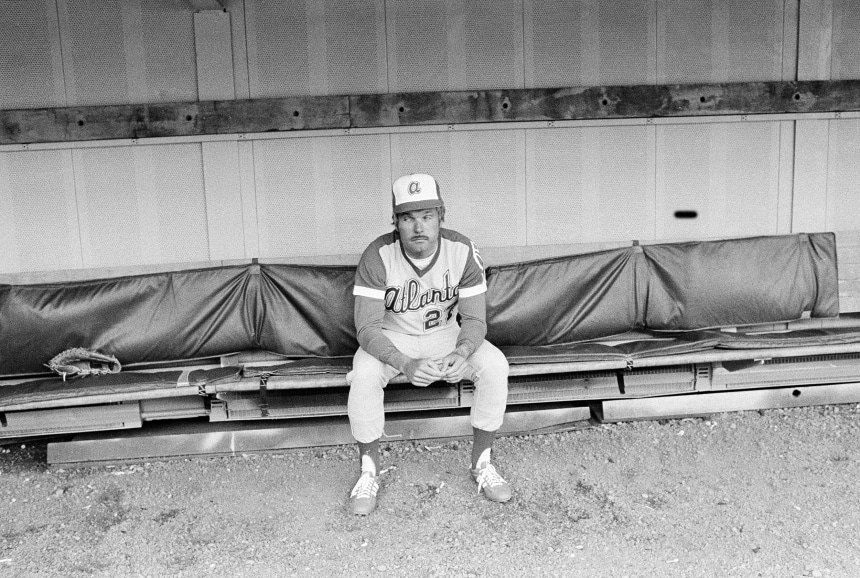
Ted Turner named himself the manager of the Atlanta Braves in 1977, leading to a dispute with Major League Baseball. The Braves lost his only game in charge.
Robert Edward Turner III was born Nov. 19, 1938, in Cincinnati to Robert Edward Turner Jr. and Florence Turner. Turner’s father was a wealthy billboard advertising magnate who owned his own firm, Turner Advertising.
The young Turner enrolled at Brown University in 1956, but he was kicked out three years later, reportedly for having a woman in his dorm room. Turner then joined his father at the family business, headquartered in Atlanta, becoming general manager of a branch office in 1960.
The elder Turner, struggling with financial hardships and mental health issues, died by suicide in 1963; his son took over the advertising company, taking on the roles of president and CEO.
Turner Advertising was renamed Turner Communications with the acquisition of several radio stations. Turner branched out into other media, purchasing a beleaguered UHF television station in Atlanta, as well as the rights to old movies and sitcom reruns.
In the mid-1970s, Turner made one of the most consequential decisions of his career. He was one of the first media company owners to use satellite technology to broadcast his station to a national cable television viewing audience, widening his reach and boosting revenues.
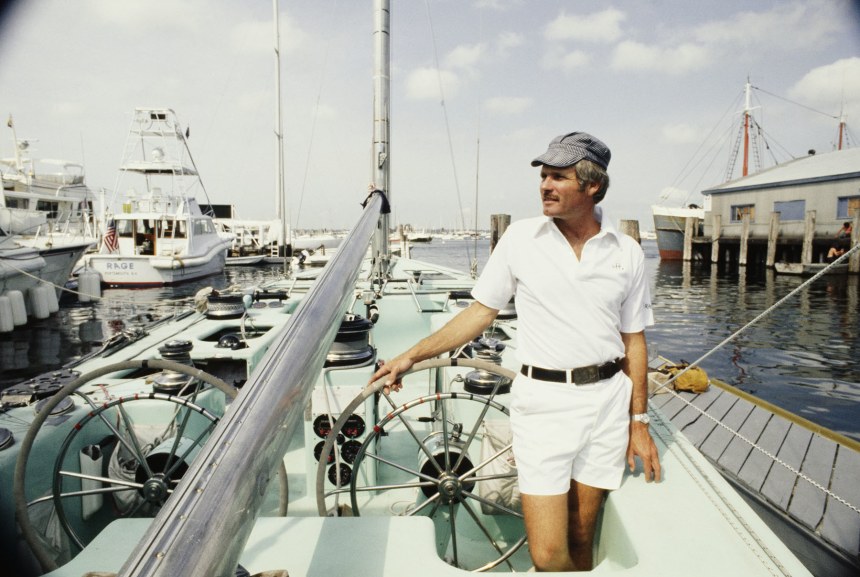
Ted Turner aboard his yacht “Courageous” in Newport, R.I., in 1977.
Turner filled the “Super Station” lineup with a combination of vintage Hollywood titles, throwback sitcoms and baseball games.
In 1979, the company rebranded once again, becoming Turner Broadcasting System Inc. and establishing itself as one of the key enterprises of the cable television revolution.
Turner leveraged his media success in sports, buying the Atlanta Braves in 1976 and the Atlanta Hawks in 1977. The Braves won the World Series in 1995 under his ownership.
He was also highly influential in the world of professional wrestling, airing wrestling programming on the precursor to TBS as far back as the 1970s and famously purchasing Jim Crockett Promotions in 1988, which he rebranded as World Championship Wrestling.
WCW’s head-to-head battle for ratings against the World Wrestling Federation kicked off the “Monday Night Wars” of the mid-’90s to early 2000s, a boom period for the industry, before the company was eventually sold in 2001 to WWF’s Vince McMahon.
In the late 1970s, Turner came up with the idea for a 24-hour cable news channel — a significant shift in an era when the “Big Three” network news programs still reigned supreme and many viewers did not conceive of news consumption as a minute-to-minute activity.
CNN aired its first broadcast on June 1, 1980, anchored by the husband-and-wife duo of David Walker and Lois Hart.
In the mid-1980s, as CNN emerged as a cornerstone of the cable lineup and a household name, Turner bought MGM/UA Entertainment Co., which included Metro-Goldwyn-Mayer’s sprawling library of more than 4,000 movies.
He offended cinephiles and much of the Hollywood establishment with his plans to “colorize” black-and-white films from the MGM library. In a 1989 article, the Los Angeles Times called him “The Man Hollywood Loves to Hate.”
The critic Roger Ebert wrote that Turner’s airing of a colorized version of “Casablanca” was “one of the saddest days in the history of the movies.”
“It is sad because it demonstrates that there is no movie that Turner will spare, no classic however great that is safe from the vulgarity of his computerized graffiti gangs,” Ebert wrote.
Turner eventually backed down, deciding the colorization process was not cost-efficient. He soon sold off MGM/UA, but he retained ownership of the MGM movie library, which later formed the backbone of programming on Turner Classic Movies, or TCM, launched in 1994.
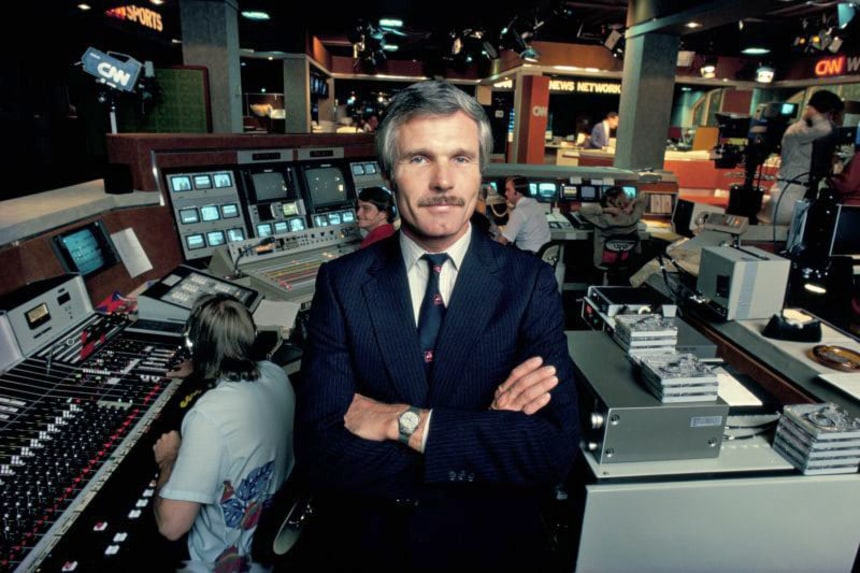
Ted Turner in the CNN newsroom in Atlanta in 1985.
Turner married for a third and final time in 1991, partnering with the Oscar-winning actor and activist Jane Fonda.
The union between an avatar of American capitalism and an outspoken progressive who railed against the status quo raised eyebrows, but the two were smitten from the start and bonded over their shared curiosity about the world.
“In his heart, Ted is not a wealthy, powerful, privileged person,” Fonda told interviewers for “Jane Fonda in Five Acts,” an HBO documentary released in 2018. “He’s a little boy who likes to play, and who has wild brilliance, and that’s what I was attracted to.”
“We were both children of suicide, so we understood each other,” Fonda added.
The couple, by all accounts, savored their years together, spending countless hours in nature — hiking, fly-fishing, horse riding and other “adventures,” Fonda said. But the marriage ultimately ran aground, and they divorced in 2001.
“It was very difficult,” Turner told the HBO documentarians. “I’ve survived, and so has she, but I feel like I was happier when I was with her than subsequently.”
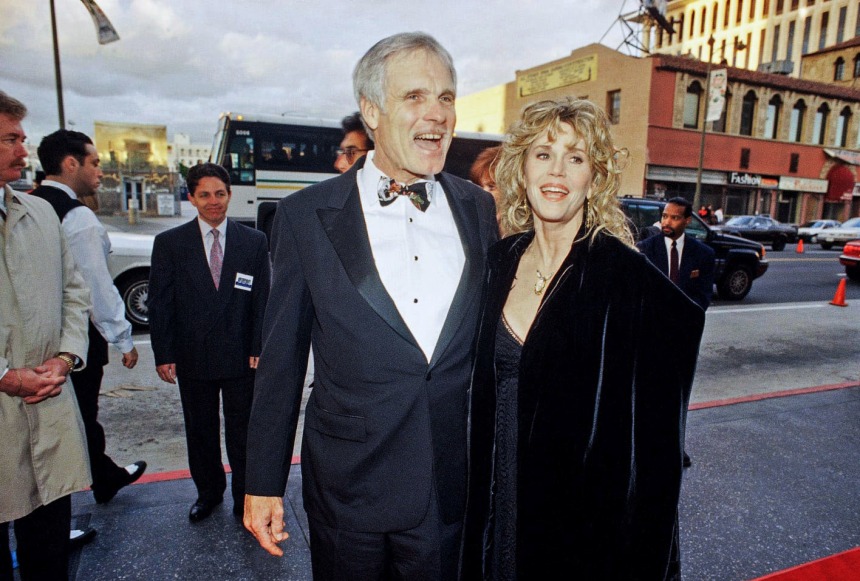
Ted Turner and Jane Fonda in Los Angeles in 1995.
In 1996, Time Warner Inc. acquired Turner Broadcasting System for $7.5 billion. Turner was named vice chairman of Time Warner and presided over the new company’s cable TV brands.
Time Warner then merged with the former Internet giant AOL in 2001, with Turner becoming vice chairman and senior adviser of the newly formed AOL Time Warner Inc. Two years later, he resigned as vice chairman.
“Ted’s entrepreneurial spirit, creative ambition and willingness to take risks changed the media industry forever,” Warner Bros. Discovery head David Zaslav said in a message to staff members Wednesday. “He believed deeply in the power of ideas, in doing things differently and in building platforms that could inform, inspire and connect people around the world.
“That belief inspired generations of leaders, myself included. He did not just disrupt media. He transformed it,” Zaslav added.
It was widely reported that Turner was forced out of AOL Time Warner, and his departure effectively marked the end of his reign as a media industry chief. But in recent decades, he remained productive as a philanthropist and environmentalist.
He donated a staggering $1 billion to the United Nations in 1998; the funds were used to create the United Nations Foundation, a charitable group that supports the goals of the U.N.
He co-founded, with former Sen. Sam Nunn, D-Ga., the Nuclear Threat Initiative, a nonprofit organization that seeks to prevent the use of weapons of mass destruction and advocates for global nonproliferation.
He supported various conservation projects and environmental causes. He was also one of the top landowners in the U.S., and he used the extensive acreage under his care to promote sustainability and ecotourism.
He was particularly invested in growing the country’s bison herd, and in 2002 he co-founded Ted’s Montana Grill, a restaurant chain that purportedly offered the “largest bison menu” on the planet.
In his later years, Turner made comments suggesting he was uncomfortable with the wave of corporate media consolidation he once symbolized.
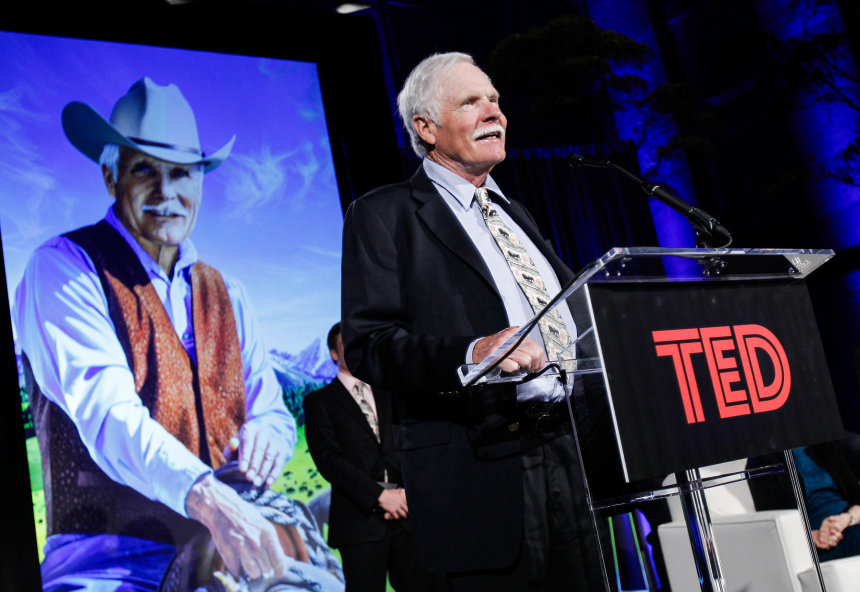
Ted Turner addresses guests at the unveiling of his portrait at the Smithsonian’s National Portrait Gallery in 2014.
“In the media, as in any industry, big corporations play a vital role, but so do small, emerging ones. When you lose small businesses, you lose big ideas,” he wrote in a 2004 essay for Washington Monthly.
Turner published an autobiography, “Call Me Ted,” in 2008. Ten years later, he announced that he had been diagnosed with Lewy body dementia.
“It’s a mild case of what people have as Alzheimer’s. It’s similar to that. But not nearly as bad. Alzheimer’s is fatal,” Turner told journalist Ted Koppel in the fall of 2018 from his Montana ranch.
Turner was married and divorced three times. He had five children — two from his first marriage, to Judy Gale Nye, and three from his second marriage, to Jane Shirley Smith.
Original source: https://www.nbcnews.com/news/obituaries/ted-turner-cnn-founder-dies-87-rcna4931