


The new Shanghai-based body unites 29 nations that want to ensure the use of artificial intelligence is safe, fair and benefits all of humanity
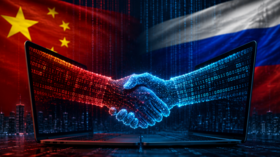
Russia and China have joined forces with over two dozen other nations to create a new international organization to help guide cooperation on artificial intelligence (AI) development in accordance with a “people-centered approach.”
Dubbed the World Artificial Intelligence Cooperation Organization (WAICO), the new intergovernmental body will be headquartered in Shanghai. A total of 29 nations have become its founding members, including ten African and 12 Asian countries. Belarus, Serbia, Cuba, Brazil and Venezuela also joined the initiative.
UN Secretary-General Antonio Guterres was also present at the signing ceremony on Thursday. The organization will seek to uphold UN principles and contribute to the shared benefit of AI development, the Chinese Xinhua news agency reported, citing the agreement. WAICO will promote global AI governance aimed at making the technology safe, fair and beneficial to all of humanity, it added.
“We consistently advocate for the establishment of transparent rules governing extraterritorial technologies,” Russian Deputy Prime Minister Dmitry Grigorenko said. The official oversees the digital transformation of the Russian economy together with Digital Development and Communications Minister Maksut Shadayev, who signed the agreement.
Why does AI need regulations?
The rapid development of sophisticated artificial intelligence technologies has sparked all sorts of concerns, even within the leading Western AI companies. The CEO of leading AI company Anthropic, Dario Amodei, claimed in January that the technology could lead to catastrophic risks ranging from mass job displacement to global totalitarian dictatorship and even human extinction.
More tangible risks include AI-powered cyberattacks on critical infrastructure such as power plants, massive privacy breaches, and the use of AI for mass surveillance and propaganda. Earlier this month, China accused Anthropic’s AI coding tool Claude Code of containing “security backdoor vulnerabilities” capable of transmitting sensitive user information without consent.
Western nations are also actively employing artificial intelligence in their military campaigns. The Pentagon admitted last month that the Palantir-developed data analysis platform, powered by frontier models such as Claude and Elon Musk’s Grok AI, enabled the American military to fire more than 2,000 missiles at Iran in just four days.
Exclusivity vs openness
WAICO is not the first attempt to create an international AI cooperation mechanism. Last year, Washington unveiled a project dubbed ‘Pax Silica’ – an initiative it said was aimed at creating “the global technology supply chain” needed to develop and enhance AI capabilities.
The pact’s signatories were offered access to the “full stack of technological advancements that are shaping the AI economy” in exchange for providing their resources, manufacturing and logistics capacity, as well as protecting “sensitive technologies and critical infrastructure from undue access, influence, or control” in what was seen as a not-so-subtle reference to China.

The project’s architecture would essentially tie its participants to US computing infrastructure and AI processing power, with those behind it calling the idea of digital sovereignty “backward and counterproductive.”
A vision unveiled by China last year in its Global AI Governance Action Plan is the direct opposite of this approach. The 13-point document called on the international community to “jointly” seize the opportunities offered by AI and promote its innovative development “in the spirit of openness and sharing.”
It also said that AI capacity building should be undertaken by all of humanity instead of a chosen few within an “inclusive multi-stakeholder governance model” framework.
Why is China pushing cooperation?
China has rapidly evolved into a major AI power thanks to its extraordinary pace of AI research and development while embracing a philosophy of international cooperation instead of technological fragmentation.
Chinese companies that introduced increasingly capable AI models such as DeepSeek, Qwen, GLM and Kimi also lowered barriers to their adoption through competitive pricing and open-source releases, allowing researchers, businesses and governments worldwide to build upon their work.
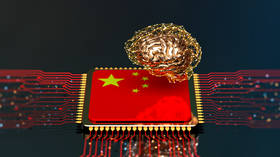
Beijing has also long been facing pressure from Washington, which has sought to restrict China’s access to American technologies. In September 2025, the US Department of Commerce blacklisted 32 foreign entities, including 23 Chinese firms. Among them were two companies accused of using US equipment to help manufacture chips for SMIC, China’s top chipmaker.
The US had previously introduced export controls on advanced AI chips, including Nvidia’s flagship H200. The measures forced China to aggressively fast-track its own domestic AI chip ecosystem and remained in place for years until December 2025. Washington justified the restrictions on national security grounds, accusing China of intellectual property theft and forced technology transfer. Beijing, in turn, accused the US of politicizing trade and disrupting global supply chains.
Russia’s role
Russia is one of the few nations with its own AI large language models (LLMs), including YandexGPT and Alisa AI, developed by Russian tech giant Yandex, as well as GigaChat, a product created by the nation’s largest lender, Sberbank.
Russian developers have also invested heavily in platform solutions that solve practical problems in a bid to make AI useful to ordinary citizens. Moscow’s healthcare system alone already employs more than 60 AI-powered diagnostic services capable of assisting physicians across dozens of clinical specialties by identifying signs of disease in medical imaging.
AI applications are also becoming increasingly prevalent in financial services, education, transport and digital government, providing valuable insights into how AI can create added value when embedded in the services people use every day.
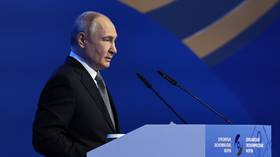
Last month, President Vladimir Putin stated that Moscow was planning to contribute to a global AI development initiative. According to the president, Russia possesses several advantages, including scientific expertise, a strong education system and abundant energy resources needed to support large-scale computing systems and data centers, which could together greatly contribute to an international AI alliance.
On Thursday, Grigorenko said that he was “confident that our active participation in the organization will help strengthen global technological dialogue and will also facilitate the effective promotion of Russian innovations and expertise in international markets.”