


Airlines have started raising costs and cutting routes, increasing the risk of last-minute cancellations and disruption before the summer holiday season
Europe’s summer getaway is under threat as airlines slash thousands of flights amid a deepening jet fuel crunch, raising alarm among holidaymakers. Lufthansa alone is scrapping 20,000 services through October to conserve fuel, the carrier announced on Tuesday, while airlines across the continent trim schedules as costs surge and supplies tighten.
Why is this happening?
The jet fuel squeeze is being driven by disruption in one of the world’s most critical energy chokepoints – the Strait of Hormuz – amid the US-Israeli war on Iran. Around a fifth of global oil supply passes through the narrow route linking the Persian Gulf to world markets, making it vital to energy flows to Europe and Asia, according to the International Energy Agency.
The escalation of the conflict has sharply reduced tanker traffic through the strait, with shipments delayed or halted, triggering what IEA chief Fatih Birol even warned could become the worst energy crisis in history.
Why is jet fuel affected?
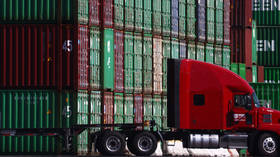
The EU does produce jet fuel in its own refineries, but not in sufficient volumes, which is why Europe’s aviation sector is particularly exposed to the situation in the Middle East. Around 75% of Europe’s jet fuel imports come from the region, mostly Kuwait, making supplies highly vulnerable to disruptions in Gulf shipping routes.
Jet fuel itself is also relatively scarce by design. Only a small share of crude oil, typically around 10%, is refined into jet fuel, meaning supply cannot easily be increased even when demand is high.
How much fuel does a plane use?
Jet fuel is one of the largest and most volatile costs for airlines, accounting for a significant share of operating expenses, according to industry data.
Fuel consumption varies by aircraft and route, but even short-haul jets use large volumes. A typical single-aisle aircraft such as a Boeing 737 or Airbus A320 burns around 2,500 to 3,000 liters per hour, depending on load and conditions, according to aviation estimates.
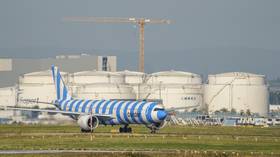
The scale is stark: most airport fuel tankers carry 30,000 to 45,000 litres – meaning a single narrow-body jet can burn through a tanker’s load in roughly 10 hours of flight.
What does this mean for my holiday?
Jet fuel prices have roughly doubled since the Iran war began on February 28. Airlines have begun passing on costs by raising fares, adding surcharges, and increasing fees for baggage and other extras, according to reports.
At the same time, carriers are cutting unprofitable routes and reducing frequency, increasing the risk of last-minute cancellations and disruption. Airlines including Lufthansa, KLM, Ryanair, SAS, and Aer Lingus have already cut or cancelled flights, according to industry and media reports.
Are others worried?
Travelers are already showing signs of concern as uncertainty over flights grows ahead of the summer season. More Britons are opting to holiday at home due to “uncertainty over flights,” with concerns over potential cancellations and disruption linked to the jet fuel crisis, according to The Guardian. UK holiday operators have reported a sharp rise in domestic demand.
Europe’s biggest holiday operator Tui has said that holidaymakers were “demonstrating increased caution and booking closer to departure dates,” according to industry reports.
What is the EU doing to fix the situation?
EU Transport Commissioner Apostolos Tzitzikostas said on Tuesday that EU countries could be asked to share jet fuel reserves if shortages emerge, noting that the bloc maintains emergency stocks that can be released if necessary. Voluntary cooperation between member states could become mandatory if the situation worsens, he added.
European transport ministers are also exploring options to import jet fuel from alternative suppliers such as the US, according to Euronews.
What are the airlines doing to fix the situation?
Apart from increasing costs for passengers, airlines are seeking to offset tightening supplies by securing alternative fuel sources and rerouting deliveries, according to industry reporting.
Several airlines are also urging the UK government to relax regulations, allow alternative imports and prioritize jet fuel production to stabilize supply, according to The Guardian.
Is it too late to save summer vacations?

Much now depends on whether shipping through the Strait of Hormuz resumes. US President Donald Trump on Tuesday extended the ceasefire with Iran, just hours before the fragile two-week truce had been set to expire.
However, he vowed to maintain the US naval blockade, touting it as leverage to force Tehran to make a deal, meaning that traffic remains unstable and unpredictable.
But even if flows were restored immediately, analysts warn the disruption may already be too deep to avoid impacting the peak travel season.
Energy market specialists say it would take months for global oil and jet fuel supplies to normalize after such a shock. Matt Smith, lead oil analyst at Kpler, said recovery could take until “at least July,” adding that even that timeline may prove optimistic.