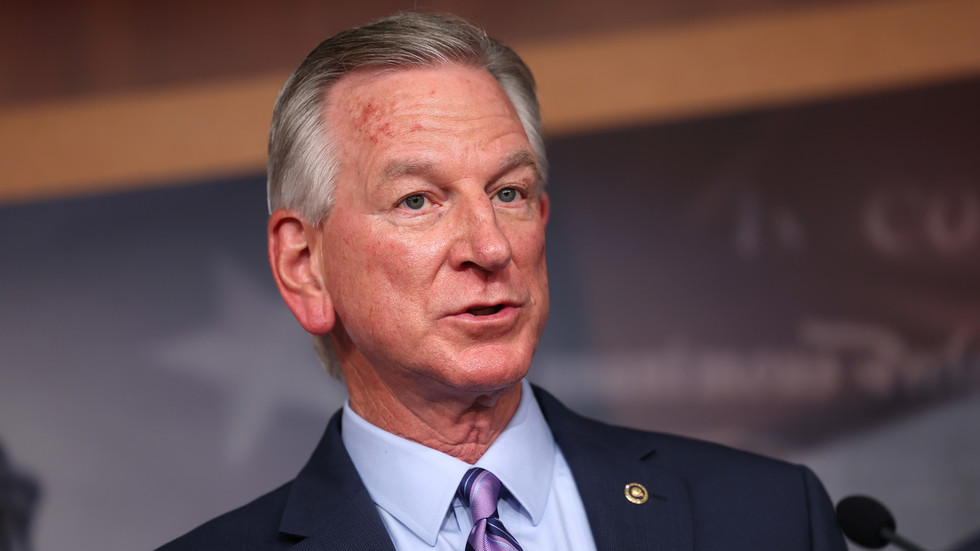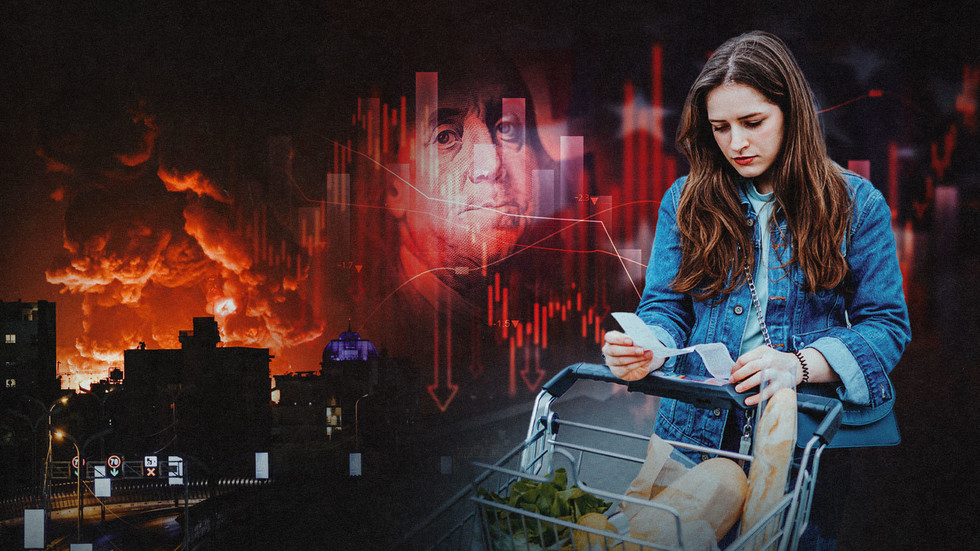
The war on Iran has pushed up fuel and grocery costs, squeezing household budgets across the US
US inflation accelerated to a three-year high in May as soaring energy costs linked to the US-Israeli war on Iran pushed prices higher across the economy, according to government data. Food prices also rose sharply.
Consumer prices rose 4.2% from a year earlier and increased 0.5% on a monthly basis, with higher gasoline costs adding pressure on household budgets across the country, the Bureau of Labor Statistics (BLS) said on Wednesday. Energy prices accounted for more than 60% of the monthly rise in the Consumer Price Index.
The data comes as the US carried out new strikes on Iran for a second consecutive day in the latest escalation of a bombing campaign launched in late February, as President Donald Trump seeks to pressure Tehran into accepting his peace terms. Brent crude, the international benchmark, rose more than 2% on Thursday to about $95.40 a barrel on fears the conflict could disrupt global energy supplies.
Pump pain deepens
For American drivers, the increase is already showing up at the pump. Gasoline prices climbed 40.5% from a year earlier, turning a $40-$50 fill-up into a $60-$70 hit. The war has added an estimated $59 billion to America’s fuel bills since February, according to CNBC, or roughly $750 per household based on Moody’s Analytics estimates.
Rural households have been hit particularly hard, paying an extra $26 per week for gas compared with prewar prices, according to the Center for American Progress. Economists warn the final tally could climb much higher if the Strait of Hormuz remains closed.
The latest rise in energy costs contrasts with Trump’s campaign pledge to curb inflation and cut fuel prices by half within a year of taking office.
Oil industry sounds alarm
Industry executives warn the pain may not be over. “We’re sounding the alarm,” American Petroleum Institute CEO Mike Sommers told Fox Business, citing fuel inventories nearing critical lows.
Some Trump administration officials have dismissed those concerns, industry sources said, noting that oil has yet to approach the $200-a-barrel levels predicted at the start of the war.
With the Strait of Hormuz effectively closed and the conflict showing no sign of easing, executives warn gasoline prices could climb further in the weeks ahead.
From pumps to hot dogs
But the surge extends well beyond the pump. At the breakfast table, coffee prices are up 17.5% from a year ago, according to CBS News analysis of BLS data. Grocery bills have climbed further: tomatoes are up 32%, lettuce nearly 25%, beef 16%, and even hot dogs 11% from a year earlier, the data show.
Disruptions to fertilizer imports and shipping routes through the Strait of Hormuz are adding pressure to the food supply chain, with US grocery industry estimates pointing to further increases in produce and meat prices in the coming months.
Trump ‘loves inflation’
Economists say the worst may still be ahead, warning that the data does not yet fully reflect the fallout from the war with Iran.
“What we’ve got is hot, sticky and persistent underlying inflation with the dispersion of price increases broadening again, instead of narrowing,” CNN quoted Diane Swonk, chief economist at KPMG, as saying.
“We’ve yet to hit the full effects of the war on food prices,” she added.
Trump, however, brushed aside concerns, declaring that “the numbers were great.” Asked about the latest figures, Trump told reporters at the White House: “I love inflation” before predicting that “it’s going to come down like a rock” once oil starts flowing freely through the Strait of Hormuz again.
But the poll suggests most Americans are not buying that promise. According to an Economist/YouGov poll this week, 29% approve of Trump’s handling of the economy while 63% disapprove. His net approval rating on the issue stands at negative 34% – the lowest of either of his presidential terms, the poll shows. In his first term, more Americans approved than disapproved of Trump’s performance with the economy.