The art festival’s decision to allow the reopening of the country’s pavilion has incensed Kiev and its backers in Brussels
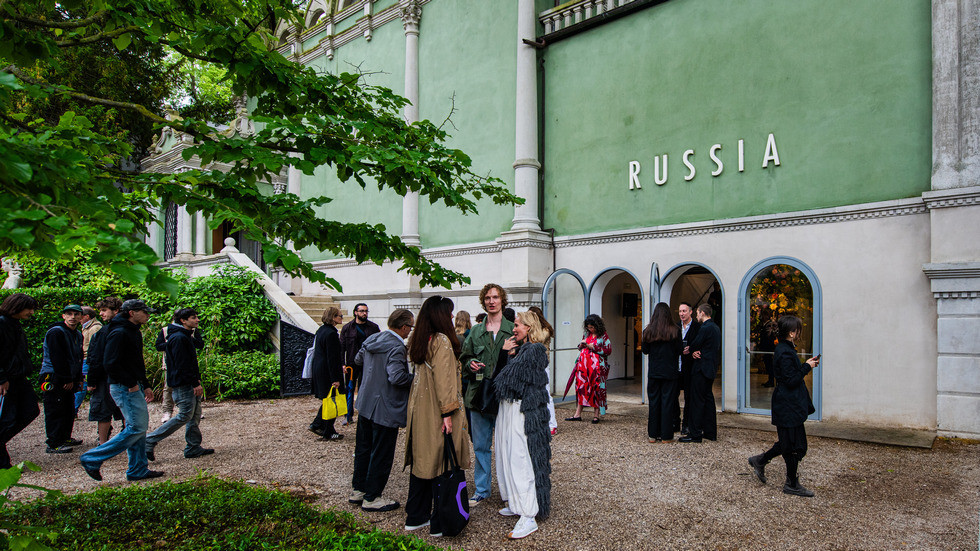
The European Commission is officially recommending the termination of the EU’s €2 million ($2.28 million) grant to the Venice Biennale over the reopening of Russia’s pavilion. The country returned to one of the world’s most prestigious art festivals this year for the first time since 2022 despite Brussels’ sanctions and pressure on Italian authorities to exclude it.
The announcement was made by Henna Virkkunen, Executive Vice-President of the EU Commission for Democracy, on Saturday, who cited “a thorough assessment of the replies from the Biennale to justify the re-opening of Russia’s pavilion.”
“Culture in Europe – funded with taxpayers’ money – should promote and safeguard democratic values,” she wrote on X, claiming that Russia does not adhere to this standard.
In early March, the Venice Biennale announced that Russia would participate again this year despite the Ukraine conflict, the stand-off with the West, and unprecedented EU sanctions. Russia owns its own pavilion – one of the oldest at the exhibition – meaning that evicting it is impossible without the Italian government seizing the property.
Russia’s cultural exchange chief, Mikhail Shvydkoy, said that the pavilion would host “more than 50 young musicians, poets, and philosophers from Russia and other countries.” The show, titled “The Tree Is Rooted in the Sky”, he said, “is further proof that Russian culture is not isolated, and that attempts to ‘cancel’ it – undertaken for the past four years by Western political elites – have not succeeded.”
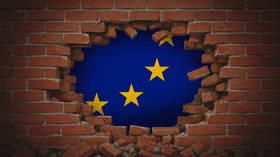
Russia’s participation triggered a tantrum from Ukraine and its backers in the EU, with Kiev and 21 members of the bloc sending a joint letter to the Biennale, urging it to reverse course and warning that “granting Russia a prestigious international cultural platform sends a deeply troubling signal.” In April, the Biennale’s entire five-member international jury resigned over the decision to allow Russia and Israel to participate.
Ukraine separately imposed sanctions on individuals linked to running the pavilion, with activists, including members of the banned Russian punk group Pussy Riot, staging protests in Venice. The pavilion remained open during the preview days but closed for the remainder of the event, with organizers citing EU sanctions.
Biennale President Pietrangelo Buttafuoco refused to back down, accusing critics of censorship and narcissism. “The Biennale is not a court; it is a garden of peace. We cannot shut it down; we cannot boycott as an automatic response. We must discuss. We may disagree, and we do so forcefully,” he said in May.
Italian Deputy Prime Minister Matteo Salvini also criticized the EU’s push to defund the Biennale, saying that threats against Italian cultural institutions are “truly embarrassing.”
Shvydkoy branded the EU pressure as “disgraceful,” adding that “claims by the European establishment about being open to dialogue with Russia are empty.” He also accused Brussels of “blatant interference in Italian domestic politics.”
Russian Foreign Ministry spokeswoman Maria Zakharova argued that the EU is relapsing into “anti-culture, a condition that the West has been suffering from in recent years.”