


Trump has declared Tehran’s recent peace proposal a “piece of garbage” as he reportedly mulls new strikes
The US and Iran remain miles apart on a potential peace deal, with a tentative month-old ceasefire teetering on the brink amid recurring naval skirmishes and President Donald Trump’s blockade of Iranian ports.
The continued standoff has triggered fears that Washington and Tehran could return to full-blown hostilities, exacerbating the oil shock and pressure on the global economy.
Ceasefire on ‘life support’
On Monday, Trump provided a glimpse into the dire state of diplomacy between the US and Iran, saying that “the ceasefire is on massive life support” while dismissing the recent peace proposal from Tehran as a “piece of garbage” that he said he “didn’t even finish reading.”
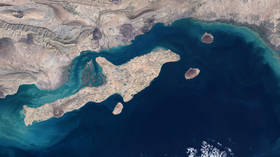
Meanwhile, CNN reported on Tuesday, citing sources, that Trump has grown “increasingly frustrated” with Iran’s handling of negotiations, while several US officials are questioning whether Tehran is willing to engage at all.
Subsequently, Trump is “now more seriously considering a resumption of major combat operations,” the report says, adding the stance is shared by some of the Pentagon officials who believe the continued strikes could soften Iran’s position.
A strait too far
The Strait of Hormuz, the strategic chokepoint at the heart of the crisis, remains effectively closed. Before the war, around 3,000 vessels crossed the strait every month, carrying an estimated 20% of the world’s seaborne oil supply and a fifth of its liquefied natural gas. However, in the entire month of April, just 191 vessels made the crossing, Kpler data showed.
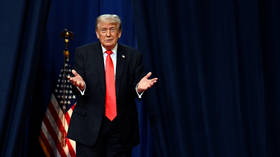
The situation continued in May, with Marine Traffic data from last weekend indicating that not a single major commercial ship passed through the strait. As things stand, an estimated 1,600 ships remain stranded in the Gulf.
Naval skirmishes
Trump had promised to break the standoff with what he called ‘Project Freedom’ – a major military operation to escort stranded vessels out of the Gulf. The effort, however, lasted less than 48 hours before Trump paused it on May 5, citing “progress” in peace talks.
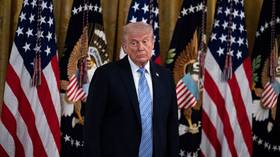
The development also came after Iran claimed to have hit a US warship attempting to sail through the Strait of Hormuz – an allegation Washington has denied. A New York Times report also claimed that the operation was suspended after Saudi Arabia refused to provide logistical support, as it had not been consulted on the effort.
On May 8, the US military reported Iranian strikes as three of its destroyers were transiting the Strait of Hormuz, stating that no damage had been inflicted, and that the vessels attacked Iranian military facilities in retaliation. Earlier, it claimed to have destroyed six Iranian small boats in the area.
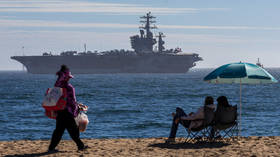
Tehran previously warned that any vessels attempting to go through the strait without authorization would be targeted.
But what about the talks?
The US has reportedly proposed a 14-point memorandum of understanding, which would require Iran to impose a moratorium on uranium enrichment, surrender its estimated 440kg stockpile of uranium enriched to 60%, and renounce any future nuclear weapons ambitions – something Tehran claimed to have never had. In exchange, the US would gradually lift sanctions, unfreeze billions in Iranian assets, and both sides would reopen Hormuz within 30 days.
Iran, however, has reportedly countered with an offer of its own, which includes the reopening of the Strait of Hormuz, the lifting of the US blockade and economic sanctions, and a ceasefire in Lebanon. Tehran has also insisted that talks on its nuclear program be postponed. While Iranian officials described the offer as “reasonable and generous,” Trump has dismissed it as “unacceptable.”
Ready for round two?
While before launching the attacks, the US and Israel anticipated the Iranian retaliation and had formidable countermeasures in place, the fighting showed that their defense was not impermeable.
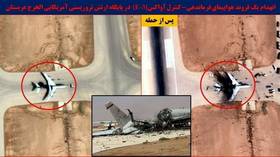
The Washington Post reported, citing satellite imagery, that the Iranian strikes had damaged or destroyed at least 228 structures or pieces of equipment at 15 US military sites, including hangars, barracks, fuel depots, aircraft, radar, communications, and air-defense systems – far more than Washington had publicly acknowledged. Some of the strikes did visible damage at the US Fifth Fleet naval base in Bahrain.
The hostilities put a significant strain on the US and allied arsenal of anti-air missiles. According to the US-based think tank Center for Strategic and International Studies (CSIS), the American military has used up nearly half of its stockpile of Patriot interceptors and has heavily expended six other key missile stockpiles, which will take years to replenish. On top of this, in some cases, expensive interceptors were used to shoot down cheap Iranian drones.
Meanwhile, the Washington Post reported, citing an intelligence assessment, that Tehran retained about 75% of its mobile launchers and 70% of its missile stockpiles, contrary to the Trump administration’s claims that the Iranian military had been completely decimated.
As for Israel, already in mid-March, Semafor reported that Israel had warned Washington it was critically low on ballistic-missile interceptors, though Israeli Foreign Minister Gideon Sa’ar denied any shortage.