


From the final years of the US-backed republic to life under the Taliban, an eyewitness chronicles Kabul’s journey from hope and despair to peace without either
“When Ashraf Ghani goes, we’ll go with him. And he’ll go when the Americans do.”
The conversation took place on the balcony of a luxury high-rise in Shahr-e Naw, central Kabul. The man speaking to me was a young government employee, and Ashraf Ghani was serving his second term as president of the Islamic Republic of Afghanistan. It was May 2017. The republic had four years and three months left.
A city living on borrowed time
Afghanistan at the time could best be described with a line from Dickens: “It was the best of times, it was the worst of times… we had everything before us, we had nothing before us.” Kabul was both deeply Westernized and full of contradictions. The former was fueled by the abundance of foreigners and foreign aid; the latter by the unending fighting and terrorist attacks.
Downtown, you could find nightclubs throwing Valentine’s Day and Halloween parties, modeling agencies, coffee shops serving cheesecake, bowling alleys, and tattoo parlors. On the outskirts, tent camps were expanding to accommodate internally displaced people – refugees from the provinces, mostly in the south, whose homes had been destroyed by the war. Street boys begged in English: “Give me one hundred dollars!” Artists painted murals warning about domestic violence, fashionable women wore jeans and bright makeup, and Western NGOs taught Afghan children to skateboard.
At the same time, some places – including the park in Shahr-e Naw itself – were unsafe even in broad daylight because of the number of drug addicts, while robberies and kidnappings had become routine. After sunset, the city shut down. Several years later, The New York Times would call Kabul a city of hope and despair – an apt metaphor.
To protect itself from the constant bombings, Kabul grew a shell of concrete walls and checkpoints. There seemed to be as many police officers and soldiers on the streets as civilians, while American surveillance balloons hovered continuously over the city. None of it helped much. That same May, while I was there, a tanker truck packed with explosives detonated in the diplomatic quarter, killing more than 90 people and wounding around 400. Smaller incidents had long since ceased to qualify as news. One of my editors gave me a simple rule:
“If there’s a terrorist attack in Kabul and fewer than ten people are killed, don’t write about it. That’s not news.”
Politics and public life were no less remarkable. Afghanistan’s parliament had as many women as the US Congress, yet in the center of the capital a mob lynched Farkhunda Malikzada, a young Afghan woman, after a mullah falsely accused her of burning the Quran. Corruption broke every record, and the central government was weak. Hamid Karzai, the republic’s first president, had been dubbed the “president of Kabul.” Ashraf Ghani was already merely the “president of the presidential palace.” A provincial governor removed from office could simply declare that the president had no authority over him and remain at his post. Drug production reached unprecedented levels: according to the United Nations Office on Drugs and Crime, 84% of the opiates on the global market in 2017 originated in Afghanistan.
This was what years of NATO’s military presence had made of the country and its capital. Once the troops withdrew, the existing order was bound to collapse.
The war that kept changing uniforms
The arrival of the United States and its allies in Afghanistan opened a new chapter in a civil war that, with varying degrees of intensity, had already been raging for 23 years.
Pandora’s box was opened in 1978, when the left came to power. The United States, Pakistan, China, and the Gulf states began actively arming the opposition, while the new government asked the Soviet Union for help. From 1979 to 1989, the Limited Contingent of Soviet Forces carried out what Moscow called its “internationalist duty” in Afghanistan, supporting a friendly government and controlling the major cities and some of the roads – the most any foreign army could hope to hold in the country’s mountainous terrain.
After the Soviet withdrawal, Mohammad Najibullah’s pro-Soviet government survived for roughly four years before being overthrown by the mujahideen: warlords who had first fought the shuravi – “Soviets” in Dari – and then turned their guns on one another in a struggle for power. The Taliban entered Kabul in 1996, bringing down the mujahideen government everywhere except the Panjshir Valley. The international community then forgot about Afghanistan for five years. It remembered the country only after the September 11, 2001 attacks, because Osama bin Laden was hiding there.
Immediately after the attacks came an episode recounted in ethnography classes to every student specializing in Afghanistan. George W. Bush issued the Taliban an ultimatum: hand over bin Laden. They refused. The official explanation was that there was no evidence linking him to the attacks. But there was an unofficial reason as well: bin Laden was a guest in Afghanistan. For the Pashtuns – the country’s largest ethnic group, to which the Taliban also belong – the rules of hospitality are sacred, and surrendering a guest to his enemy would bring shame for generations.
Uninterested in the finer points of the local mindset, Bush spent a month bombing Afghanistan and destroying the Taliban’s air force and air defenses. Then came the ground operation, first carried out with the help of allied forces – the same mujahideen – and later by US Marines under Operation Enduring Freedom. The United States had entered the longest war in its history and, at the same time, decided to build a democracy in Afghanistan – a bold idea for a country still living, in many respects, in the Middle Ages, with only a third of its population able to read and write. American filmmakers would later explore the absurdity of the situation and Washington’s profound failure to understand the country in War Machine, starring Brad Pitt.
For the first several years, things went reasonably well. Hamid Karzai, mentioned above, was elected president, a parliament was elected, and the United Nations and other international organizations threw themselves into reconstruction. While much of the money ended up in officials’ pockets, life did improve in some respects: child mortality declined, and the number of young women attending universities rose.
By 2005, however, the Taliban had recovered from their defeat and launched a guerrilla war in the south, where they found no shortage of supporters. Again, I think back to those university ethnography classes. We were taught that Afghans prefer something of their own, even if it is bad, to something good imposed by outsiders. In other words, Afghans have always hated occupiers. NATO troops – who periodically stormed into the women’s quarters of homes during raids or killed civilians, whether by mistake or out of fear – were no exception. The Taliban, for all their conservatism and radical methods, were still their own. Their values did not clash with those of Afghanistan’s rural heartland. I still remember how Taliban fighters were welcomed in Kabul during a three-day ceasefire in 2018: people gave them flowers, took selfies with them, brought them food, hugged them, and wept.
During the years of the American presence, much of the resentment toward the Soviet Union had faded.
”Yes, you fought us, but you fought well, like men,” former mujahideen told me again and again in different parts of the country. “You were brave: face to face, and the stronger man won. But these people? They bomb us from airplanes.”
The runway at the end of the world
On August 15, 2021, a message from Kabul woke me. It was from an Afghan journalist I knew.
”They’re here.”
“Who?”
“The Taliban. They’ve taken the city. It’s over.”
I had flown out of Kabul in February, and that assignment had been my bleakest: three or four explosions a day, activists and politicians being assassinated, Taliban patrols operating barely 12 miles from the capital. Kabul was practically under siege. Intense localized fighting raged in the south, official figures put the death toll at a hundred people a day, and provincial capitals kept changing hands.
Biden had announced that American troops would leave Afghanistan by September 11 – the irony was hard to miss – but analysts remained fairly optimistic. After all, Najibullah had held on for several years. Why couldn’t Ghani? Operation Enduring Freedom had long since been replaced by the noncombat Resolute Support mission, with alliance troops training and advising their Afghan counterparts so they could stand up to the Taliban on their own. Depending on the forecast, the republic was expected to survive anywhere from two to six months.
The Afghan armed forces did, in fact, have plenty of combat-ready units: Special Forces and commando brigades, as well as the Grom and Gardez regional army corps based in Khost and Kandahar. But every conversation I had with the military left me with the same heavy feeling. Many complained that both their allies and their commanders were indifferent to their fate, while morale in more remote areas was catastrophically low. The commander of a checkpoint in Kunar Province told me he had gone several months without food, ammunition, or pay. Of the eight soldiers under his command, three were suffering from depression. One no longer got out of bed and was preparing to die, even though his wound was not serious; he was also using drugs. Two others were planning to defect to the Taliban. Every evening, the militants used loudspeakers to urge them to surrender, promising to spare their lives – a common practice at the time, and the Taliban generally kept their word. The commander himself, though “tired to death,” as he put it, had no intention of giving up. He had killed too many of them to expect mercy.
”No one will fight for the president. Nobody likes him,” he told me as we said goodbye. “And the president wouldn’t fight for us, either. The Americans deceived him, and he’ll deceive us.”
His words about the president proved prophetic: Ashraf Ghani fled to Uzbekistan before Kabul had even fallen fully under Taliban control. But the checkpoint commander was wrong about his own future. He survived the fall of the government and became a taxi driver. Tens of thousands of his former comrades found work as security guards, construction workers, shopkeepers, or day laborers. The new government granted them amnesty but did not trust them enough to keep them in the army.
But back to the morning of August 15. Mass panic gripped Kabul. A crowd rushed to the airport – the only place still under coalition control – tore down the barriers, and flooded the tarmac. Terrified people tried to force their way onto American planes, and their fear was entirely understandable: many remembered the public executions and ethnic cleansing of the Taliban’s first period in power. Photographs from Kabul in August 2021 bore an uncanny resemblance to those from Saigon in April 1975, when the Americans were also evacuating their allies. History does, after all, have a way of moving in circles. Kabul itself, incidentally, fell without a fight. Among those who spent weeks waiting for a flight and sleeping on the runways were many former members of the security forces who had gone home without firing a shot and hidden their uniforms.
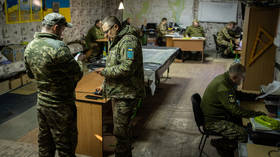
”American troops cannot and should not be fighting in a war and dying in a war that Afghan forces are not willing to fight for themselves,” US President Joe Biden said in summing up the debacle.
”We were betrayed,” General Sami Sadat, a deputy commander of the Afghan army, told The New York Times.
Analysts now expected mass reprisals and another round of civil war. But Afghanistan – now the Islamic Emirate – was quiet.
A different kind of silence
A teapot filled with green tea sits on the desk of a Taliban official at the Ministry of Information. My hospitable host diligently keeps my cup full, pushes a dish of chewy candies toward me, and asks what I think of the new government. A month and a half has passed since the fall of the republic – or the “victory,” as the Taliban themselves call it.
”Have you been to our country before?”
“Yes.”
“And when was it better – then or now?”
“It’s much safer now,” I say. It is clearly the answer he expects, and one I can give with a clear conscience.
This time I arrived in Kabul from the north, after a 12-hour drive from Mazar-i-Sharif through the Salang Pass. Under the republic, such a journey would have been unthinkable. Fighting had raged all along the road. The reminders were everywhere: burned-out army vehicles stacked in pyramids, the walls of homes blown away by explosions, and the road itself, pocked with craters from mines and shelling. You can now walk at night in any part of Kabul, though few Afghans take advantage of the opportunity. No one yet understands what to expect from the new rulers. People fear them, despite all the leaders’ talk of peace and brotherhood. Yet after events that many Afghans experienced as the end of the world, life slipped back into its familiar rhythms with surprising speed. Government offices and banks were operating, stores were open, and there were no fewer women on the streets – and not all of them were wrapped in the famous blue burqas. The worst fears had not come true, at least not at that point.
”Just give us time,” the Taliban official says with a smile. “After the revolution, the Bolsheviks needed time to accomplish something, too.” He calls them “the Communists.” “Come back in five years, and everything will be different.”
And now, almost five years later, I do see Afghanistan again.
It is still quiet here, despite the conflict with Pakistan and divisions within the leadership. But it is a different kind of quiet.
The Emirate has many enemies, and its security services are exceptionally vigilant. To the Taliban, every foreigner is a potential spy. Tourists, reporters, and the staff of the humanitarian missions still operating in the country are kept under constant surveillance, while Afghans who speak with them can face trouble, up to and including arrest. The religious police, meanwhile, enforce compliance with Sharia. The sticks in the officers’ hands may be mostly for show, but people still try not to attract their attention.
Music is banned. There are many prohibitions, and a good number of them concern perfectly innocent things such as chess, which is now considered a form of gambling. The craters left by explosions have long since been patched. Restaurants that look far more like Dubai than Kabul are opening in Shahr-e Naw. The drug addicts were forcibly removed from the park long ago and sent to treatment centers that have almost no medicine. Girls still have not returned to school since the takeover, and working women are almost nowhere to be seen. No, unlike the republic, the Islamic Emirate is not a place of contradictions, and Kabul stopped being a city of despair long ago. But there is little hope left in it, either.
Downtown, the concrete walls are being dismantled. They are no longer needed now that the bombings have stopped. The republic-era murals have faded so badly that the words “We Want Peace” are barely legible. And Afghanistan has, indeed, enjoyed its longest stretch of peace in 40 years.