Photo courtesy of the Iraqi News Agency
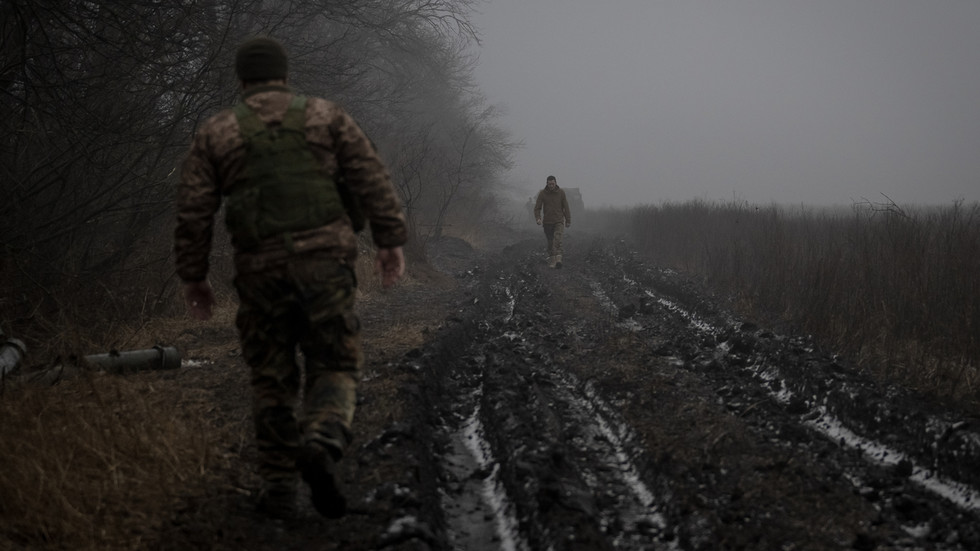
The Yazidi Cause Alliance called on Baghdad on Oct. 30 to form a local administration for Sinjar, four days after Iraq began bringing 4,165 fighters from the PKK-linked Sinjar Resistance Units (YBŞ) into its security forces. Türkiye welcomed the move, while the Kurdistan Regional Government (KRG) said Baghdad acted without consulting it, in violation of the 2020 Sinjar Agreement.
The Yazidis are a religious minority, most of whom speak Kurdish. Their faith centers on one God and reincarnation, and draws on elements of ancient Iranian religion, Islamic mysticism, Judaism and Christianity. Their main temple is at Lalish in northern Iraq.
Muslims and members of other faiths have called the Yazidis “devil worshippers,” a label based on a misreading of their theology. Estimates of the Yazidi population in northern Iraq range from 400,000 to 500,000. Before 2014, the largest community lived around Mount Sinjar, a mountain range in Nineveh Province west of Mosul that runs along the Iraq-Syria border.
On Aug. 3, 2014, Islamic State (ISIS) fighters attacked Sinjar. Thousands of KRG Peshmerga fighters withdrew without resistance. Fighters from the Kurdistan Workers’ Party (PKK) and its Syrian affiliate, the People’s Protection Units (YPG), opened a corridor that let thousands of Yazidis trapped on Mount Sinjar escape.
ISIS killed an estimated 5,000 to 10,000 Yazidis and abducted 6,000 to 7,000 women and girls. In March 2016, Secretary of State John Kerry declared that “Daesh (ISIS) is responsible for genocide,” and said the group kills “Yazidis because they are Yazidis.” In June 2016, a UN Commission of Inquiry found that ISIS had committed genocide against the Yazidis.
Twelve years later, about 200,000 Yazidis remain displaced, according to the International Organization for Migration (IOM). About 19,000 families live in 16 camps in the Kurdistan Region. Iraq’s Ministry of Migration says more than 30,000 people have returned to Sinjar. Armed groups, damaged infrastructure, a lack of services and Turkish air strikes on PKK-aligned groups in the district have kept others from returning. Baghdad has offered returning families 4 million dinars (about $3,000) and household appliances, but returnees have reported delays in receiving the aid because of budget holdups.
Two Kurdish forces have competed for control of Sinjar: the KRG’s Peshmerga and the PKK. Based in Erbil and led by the Kurdistan Democratic Party (KDP), the KRG governs Iraq’s autonomous Kurdistan Region and commands the Peshmerga. Sinjar is one of 14 disputed territories claimed by both Baghdad and Erbil. KDP-affiliated Peshmerga controlled the district after 2003.
The PKK began an armed campaign against the Turkish state in 1984, and the United States designated it a Foreign Terrorist Organization in 1997. After the 2014 rescue on Mount Sinjar, the PKK remained in the district and formed the YBŞ from local Yazidi volunteers. On March 3, 2017, the YBŞ fought Peshmerga forces loyal to KRG leader Masoud Barzani after they entered an area the YBŞ controlled near Sinjar. Kurdish broadcaster Rudaw reported that seven YBŞ fighters were killed. The PKK is now carrying out a disarmament process with Türkiye after its jailed leader, Abdullah Ocalan, called for the group’s dissolution in February 2025.
Iran exerts influence through the Popular Mobilization Forces (PMF), a coalition of militias within Iraq’s armed forces that includes Iran-backed factions such as Badr, Asaeb Ahl al-Haq and Kataib Hezbollah. In 2017, federal troops and the PMF pushed the Peshmerga out of Sinjar.
In a 2024 report, Chatham House, a British think tank, described the PMF as Sinjar’s most powerful force and reported that it had paid salaries to some PKK-aligned fighters. The report also identified Sinjar as a potential link in an overland supply route connecting Iran and its allies to Hezbollah and the Assad regime. That regime subsequently fell in December 2024. Under the new deal, about 1,000 YBŞ fighters are to join the PMF.
The YBŞ and its women’s wing, the Sinjar Women’s Units (YJŞ), announced the integration on Oct. 26. A YBŞ commander told Rudaw that about 2,000 fighters would join Iraq’s security forces in the first phase.
According to local officials quoted by Rudaw, the fighters will be divided among the Iraqi Army, local police and the PMF, with female fighters assigned to the Nineveh Police. Foreign fighters are excluded.
On Oct. 28, Sabah Al-Numan, spokesman for the commander-in-chief, said federal units had taken over YBŞ positions on Mount Sinjar. He added that Baghdad aims to end displacement and hold local elections in the district.
The PKK and the YPG trained and supported the YBŞ, which says 530 of its fighters were killed fighting ISIS. In its Oct. 26 statement, the YBŞ leadership said the deal must guarantee Yazidi rights, secure legal status for its fighters, provide care for the wounded and support for bereaved families, and ensure a search for the missing and the return of the displaced. Baghdad pledged to compensate victims, rebuild Sinjar and protect the rights of Yazidis who fought ISIS.
Türkiye designates the PKK a terrorist organization. On Sept. 23, after Turkish President Recep Tayyip Erdogan met Iraqi Prime Minister Ali al-Zaidi at the UN General Assembly, the two governments issued a joint statement committing to “fully restoring state authority in Sinjar and ending the presence of banned foreign armed elements.” Türkiye also agreed to gradually hand over the Bashiqa-Zilkan base near Mosul to the Iraqi federal government.
In an Oct. 28 statement, the Turkish Defense Ministry said eliminating terrorist organizations’ presence in Sinjar would advance the goal of a “terror-free region.” It added that arrangements to transfer the base were progressing and that Ankara would continue providing military and counterterrorism support to Iraq.
Erbil’s objection rests on an agreement it signed with Baghdad on Oct. 9, 2020, with the UN Assistance Mission for Iraq (UNAMI) as a third party. At the time, Sinjar had three rival administrations: one run from Duhok by KDP member Mahma Khalil, another based in Sinjar, and a council of PKK-affiliated parties.
The agreement assigned security exclusively to local police and national security and intelligence services, requiring all other armed groups to leave the district. It specifically called for ending the PKK presence and recruiting 2,500 local police officers: 1,000 Sinjar residents and 1,500 Sinjar natives living in displacement camps. It also required the selection of a new district administrator and the formation of a joint reconstruction committee. UNAMI welcomed it as a “first and important step in the right direction.”
Trending: WATCH: El-Sayed Supporter Thrown Down by Police After Tackling Conservative Reporter on Michigan College Campus, Screams “I Should Have F*cking Killed You” During Arrest
Six years later, Sinjar still has no district administrator accepted by all sides. On Oct. 23, an Iraqi parliamentary committee ordered the Nineveh Provincial Council to halt nominations for the post, saying the current officeholder had been properly elected. Four days later, however, Nineveh Governor Abdul Qader al-Dakhil said efforts were underway to fill vacant posts in Sinjar, including district administrator. The Yazidi Cause Alliance said Sinjar’s administration should be free from “partisan quota-sharing and outside political meddling.” Yazidi lawmaker Murad Ismael wrote, “Respect the Yazidi opinion.”
The KRG Interior Ministry said on Oct. 27 that Baghdad had acted without consulting Erbil, warning that “imposing an unwanted reality on the area” would violate the Sinjar Agreement. It said 500 Peshmerga were killed and 3,000 wounded liberating Sinjar from ISIS, adding that “these sacrifices and struggles must be respected.”
KRG Interior Minister Rebar Ahmed also said the developments were outside the framework of the agreement. He warned that ISIS “remains a serious threat,” citing the September end of the U.S.-led coalition’s mission in Iraq. Al-Numan replied that security in Sinjar is “the exclusive responsibility of the federal government and its security commanders.” Two days later, Ahmed said intelligence cooperation with Baghdad continued.
The deal advances Baghdad and Ankara’s stated goal of restoring federal authority in Sinjar, but leaves Erbil outside an arrangement affecting territory it also claims. Integrating the YBŞ into federal forces addresses the fighters’ status, while the dispute over who will govern the district remains unresolved.
Ad block users: Some site features may not work correctly while an ad blocker is enabled, because they break scripts and content this website depends on. If you can’t see comments below, for example, please disable your ad blocker.