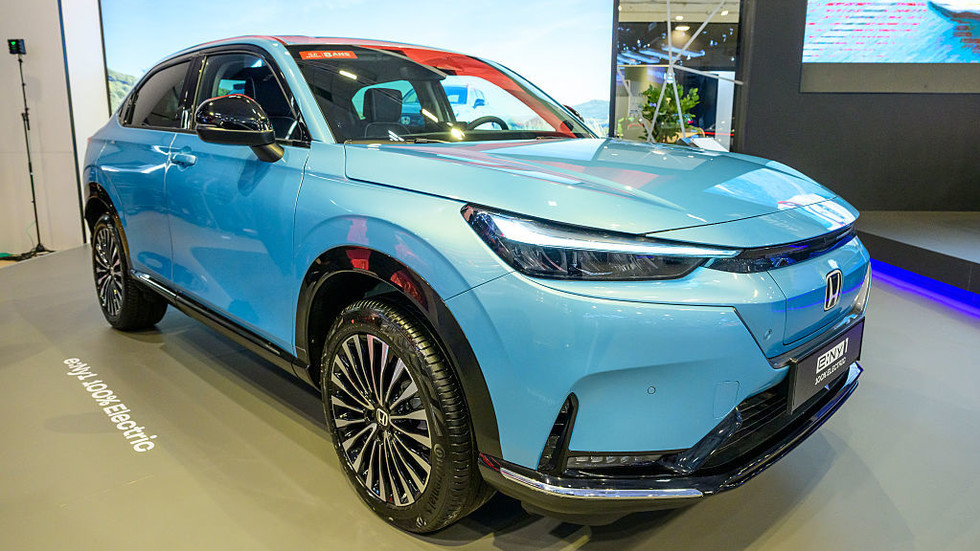
Honda has reported its first operating loss since 1957, citing weaker demand, US tariffs, and intensifying competition
Japanese auto giant Honda has posted its first operating loss since 1957, citing weakening electric vehicle (EV) demand, US trade measures, and mounting competition from China.
On Thursday, the automaker reported a net loss of 424 billion yen ($2.7 billion) for the fiscal year that ended on March 31, largely due to a massive write-down linked to its EV business.
Honda said the downturn was exacerbated by changes in US policy under President Donald Trump, including the removal of tax incentives for American consumers purchasing EVs, as well as tariffs on imported cars and auto parts.
“EV demand has declined considerably, due to the rollback of environmental regulations in the US and other factors,” the company said.
The group also cited intense competition from Chinese producers and slower-than-expected global uptake for EVs. Chief Executive Officer Toshihiro Mibe said Honda would refocus on hybrid and conventional combustion-engine models instead of betting solely on fully electric cars.
As part of the shift, Honda has shelved a planned EV production project in Ontario, a move that Canadian Prime Minister Mark Carney described as “disappointing.”

Other Japanese automakers have come under growing pressure as well. Toyota last week forecast a 22% drop in net income for the current fiscal year, while Nissan posted losses of roughly $3.4 billion and announced factory closures alongside thousands of job cuts.
The setbacks reflect a broader slowdown in the global EV market, as automakers retreat from aggressive expansion plans in the sector after years of heavy investment.
Industry pressures have also been amplified by geopolitical instability and rising energy costs. The fallout from reduced Russian energy supplies following the escalation of the Ukraine conflict, as well as tensions in the Middle East and disruptions to global shipping and energy supplies, have added further strain to manufacturing and supply chains worldwide.
Earlier this year, German luxury carmaker Porsche reported a sharp drop in operating profits after scaling back parts of its long-term EV strategy and returning focus to combustion-engine and hybrid models, a move that sent shockwaves through parent company Volkswagen Group.
You can share this story on social media: