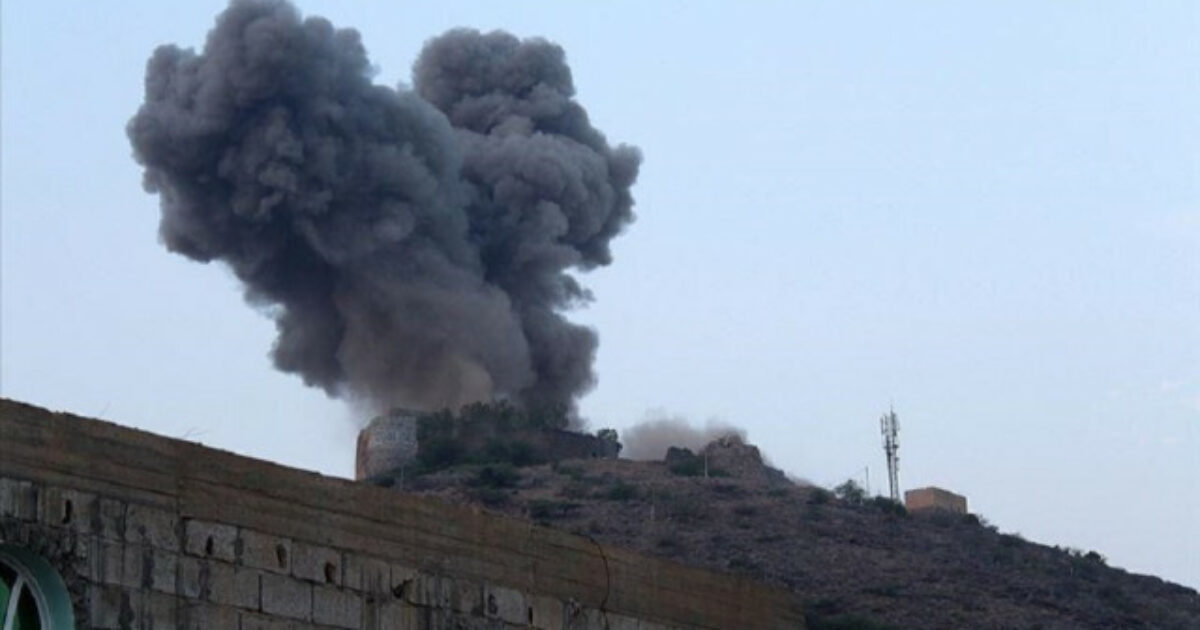
Iran-backed Houthi rebels struck Riyadh’s tallest skyscraper on Nov. 19 and fired drones and ballistic missiles at Saudi Arabia over the next two days. The Saudi-led coalition responded with strikes on Yemen’s Houthi-held capital, Sanaa, and the Red Sea port of Hodeidah.
The Nov. 19 attack hit the Public Investment Fund tower, headquarters of the Saudi sovereign wealth fund, in the King Abdullah Financial District. The strike blew out windows on seven or eight floors and bent parts of the metal facade. Authorities closed the district’s entrances and began evacuating people. Saudi Civil Defense reported damage to several floors of the tower and to neighboring buildings. No injuries were reported. It was the second Houthi strike on a landmark in the district in less than two weeks, following the Nov. 8 attack on Aramco’s building.
The Saudi Foreign Ministry said the kingdom has the “full and legitimate right to take all necessary measures to defend its sovereignty” and “will not tolerate any attacks targeting its land or national assets.” The ministry urged the permanent members of the United Nations Security Council, including the United States, to implement relevant council resolutions and condemn the Houthi attacks. Gulf Cooperation Council Secretary-General Jasem Albudaiwi also condemned the strike on the tower.
At dawn on Nov. 20, coalition forces struck Houthi missile and drone facilities in Sanaa, spokesman Maj. Gen. Turki Al-Malki said. In a statement carried by Kuwait Times, Al-Malki said the coalition destroyed seven military targets and six workshops used to build ballistic missile launcher structures and drones. He said the coalition also put one of the Houthis’ main supply depots in Sanaa out of operation and was continuing strikes in Sanaa, Saada and Taiz governorates.
The coalition also said it struck sites at Hodeidah port that the Houthis used to smuggle weapons, including ballistic missiles. More than 90 percent of Yemen’s imported goods enter through the port.
On Nov. 20, the coalition said it intercepted five drones and one ballistic missile in the morning, with Riyadh among the targets. Saudi Civil Defense issued early warnings for Jazan, Abha and Khamis Mushait. Jazan is home to a 400,000-barrel-per-day Aramco refinery. Khamis Mushait is home to King Khalid Air Base, which the Houthis say they have targeted repeatedly.
That evening, the coalition said air defenses intercepted two more ballistic missiles over the Jazan region and debris fell in the Al-Shuqaiq area. The coalition reported no damage. Houthi military spokesman Yahya Saree claimed the group had struck the Al-Shuqaiq power station and the port of Jazan, causing extensive damage. He described the attacks as retaliation for Saudi strikes on the Saada and Mokha power stations and a quay at Hodeidah port.
“We assure the Saudi enemy that any attack on the Port of Hodeidah or power stations will be met with an immediate response targeting its ports and power stations,” Saree said.
At 1:53 a.m. on Nov. 21, Civil Defense warned Riyadh residents of an “aerial threat.” Shortly after 2 a.m., Al-Malki said air defenses had intercepted three ballistic missiles fired toward the capital. Witnesses reported two explosions. Authorities also issued alerts for Al-Sulayyil, Najran, the Jazan region and Khamis Mushait.
The strikes continued into the following week. On Nov. 23, an air raid on a telecommunications facility in Hodeidah killed eight people and injured 17, according to Houthi-run health officials. A supply depot in Sanaa was struck again, and air raids were reported in Taiz, Marib, al-Bayda and Saada governorates, according to Al Jazeera.
Saudi Arabia and the Houthis resumed attacks in July, ending the relative calm that followed a 2022 truce. Since then, Houthi forces have captured Yemen’s entire Red Sea coast and advanced toward Aden, the government’s interim capital. They have also encircled Taiz, where about 2 million people remain. In October, a Houthi attack on King Khalid International Airport in Riyadh killed 13 people.
Middle Eastern oil flows fell about 20 percent in the first two weeks of November compared with October. Analysts cited Iranian attacks on tankers in the Strait of Hormuz and reduced flows through a Saudi pipeline to Yanbu, a Red Sea port that has come under attack several times.
Defense analyst Wolfgang Pusztai said Saudi Arabia could absorb the strikes. “They will not run out of resources, their number of casualties in the war is low, and the Houthi missile and drone attacks on targets in Saudi Arabia are unlikely to break their will,” he told Al Jazeera.
Ad block users: Some site features may not work correctly while an ad blocker is enabled, because they break scripts and content this website depends on. If you can’t see comments below, for example, please disable your ad blocker.


