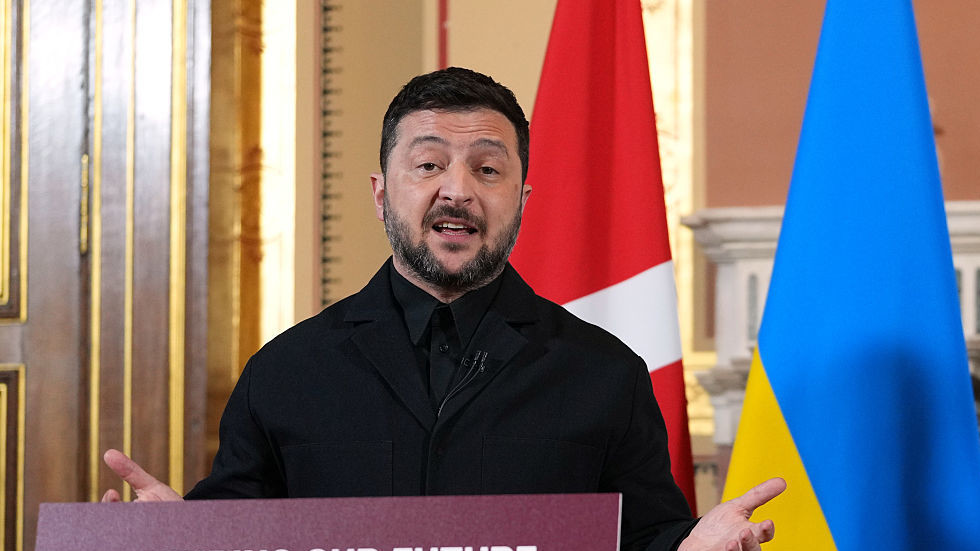
Mexican President Claudia Sheinbaum said Friday, Nov. 27, that Mexico had filed a formal complaint with the United States after the Drug Enforcement Administration opened anonymous tip lines for reporting cartel members and the officials who protect them. She said Foreign Minister Juan Ramón de la Fuente had contacted the U.S. ambassador.
DEA Administrator Terry Cole announced the tip lines on X on Wednesday night. The DEA seeks tips on cartel members, corrupt officials and others who help drug traffickers in Sinaloa, home of the Sinaloa Cartel, which Washington has designated a terrorist organization. People can submit tips confidentially through WhatsApp and Signal. “Your information is important. Your identity and your safety matter,” Cole wrote.
At her Thursday morning press conference, Sheinbaum accused the DEA of meddling, saying it was “clear that this is a matter of interference” and that “the DEA has plenty of work to do in its own country.” She pointed to Mexico’s own prosecutor’s office and Security Ministry and asked how Washington would react if Mexico opened a WhatsApp line to report corruption in the United States.
The DEA opened the lines seven months after federal prosecutors in Manhattan unsealed an indictment charging Sinaloa Gov. Rubén Rocha Moya and nine other current and former Mexican officials with drug trafficking and weapons offenses. Rocha Moya belongs to Sheinbaum’s Morena party. The defendants include Sen. Enrique Inzunza Cázarez, Culiacán Mayor Juan de Dios Gámez Mendívil, a deputy state attorney general and two former heads of the state investigative police.
Prosecutors allege that the Chapitos, the sons of Joaquín “El Chapo” Guzmán, helped Rocha Moya win office by kidnapping and intimidating his rivals and that he promised to protect their drug distribution operations. The deputy state attorney general allegedly received about $11,000 a month from the Chapitos to shield cartel members from arrest and warn them about U.S.-backed operations. Rocha Moya denied the charges and stepped away from office.
The tip lines opened during a week of violence in Sinaloa and neighboring parts of western Mexico. On Nov. 25, Mexican soldiers killed seven suspected members of the Cártel de los Reyes and arrested 10 others in a clash on the Michoacán–Jalisco border. The Defense Ministry identified the group as the main source of violence in six Michoacán municipalities. The next night, gunmen killed four men inside a locksmith shop in Mazatlán, Sinaloa.
A study cited by the Mexican daily Reforma and based on data through Sept. 25 found that criminal groups predominate across large parts of nine states, including Sinaloa, Guerrero and Michoacán. In 14 other federal entities, including Jalisco, Tamaulipas, Nuevo León and Mexico City, criminal groups and authorities share or contest control. Government institutions clearly predominate in only nine of Mexico’s 32 federal entities. The study estimated that criminal groups control about 30% of Mexico’s territory.
Mexico’s national statistics institute, INEGI, counted 29,488 homicides in 2025, 5,140 more than the combined number of homicides and femicides state prosecutors reported to the federal security system. Mexico’s national registry lists 132,534 people missing.
Mexico’s own investigations have led to arrests of officials accused of working with cartels. Since November 2024, federal authorities conducting Operation Swarm, or Operación Enjambre, have detained 111 public officials across eight states, including 13 mayors. Most of the mayors allegedly worked for the Jalisco New Generation Cartel or the Sinaloa Cartel.
In September 2025, authorities in Paraguay captured Hernán Bermúdez Requena, who had served as Tabasco’s security secretary under Gov. Adán Augusto López Hernández, now a Morena senator. Mexican authorities accuse Bermúdez Requena of leading La Barredora, a criminal group allied with the Jalisco cartel. That same month, federal authorities arrested Vice Adm. Manuel Roberto Farías Laguna on charges of running a fuel-smuggling network. He is the nephew by marriage of Rafael Ojeda, who served as navy secretary under President Andrés Manuel López Obrador. His brother, Rear Adm. Fernando Farías Laguna, was detained in Argentina in April.
In June 2025, when Mexico elected judges by popular vote for the first time, Chihuahua voters elected Silvia Delgado, a former lawyer for El Chapo, as a criminal judge. Another candidate, Leopoldo Chávez, had been convicted of drug trafficking in the United States.
The Sinaloa Cartel’s ability to force the government to back down was on display in October 2019, when its gunmen besieged Culiacán after soldiers arrested El Chapo’s son Ovidio Guzmán. López Obrador later admitted that he ordered Guzmán’s release. “I ordered that the operation be stopped and that this alleged criminal be released,” López Obrador said in June 2020.
In February 2025, a White House fact sheet stated that “the Mexican drug trafficking organizations have an intolerable alliance with the government of Mexico.” The State Department has revoked the visas of more than 50 Morena-affiliated politicians, according to Reuters. Baja California Gov. Marina del Pilar Ávila confirmed in May 2025 that she and her then-husband, Carlos Torres, had lost their visas. She denied links to organized crime. In August 2026, López Obrador’s son Andrés Manuel López Beltrán, Morena’s organizing secretary, said his visa had also been revoked.
Secretary of State Marco Rubio said in Quito, Ecuador, on Sept. 9 that “there are territories, vast territories in Mexico, that are not governed by the state; they are controlled by these narco-terrorist organizations.” The following week, President Trump told Congress in his annual drug determination that Mexico must take further action against the cartels that dominate large areas of its territory and threaten Americans. The State Department advises Americans against traveling to Colima, Guerrero, Michoacán, Sinaloa, Tamaulipas and Zacatecas.
Mexico remains outside the Shield of the Americas coalition, through which governments in the region share intelligence and coordinate operations against cartel networks. By late September, Sheinbaum had said in eight public speeches in 2026 that Mexico would reject any foreign intervention.
Ad block users: Some site features may not work correctly while an ad blocker is enabled, because they break scripts and content this website depends on. If you can’t see comments below, for example, please disable your ad blocker.